
Need help choosing the right system?
Glycol is found virtually anywhere chilling happens. One is used in foods, while the other is toxic. Distinguishing one from the other is critical to ensuring your chilling needs are met.

Glycol coolant is one of the most common cooling liquids used in chillers everywhere. It comes in two forms: propylene and ethylene.
Types of Glycol
Propylene: Propylene glycol is a synthetic liquid substance that absorbs water. Propylene glycol is also used to make polyester compounds, and as a base for deicing solutions. Propylene glycol is used by the chemical, food, and pharmaceutical industries as an antifreeze when leakage might lead to contact with food.
- Toxic: No
- Freezes: -74.2°F
Ethylene: Ethylene glycol, a derivative of ethylene oxide, is used for the manufacture of polyester fiber for clothes, upholstery, carpet, and pillows and the blending of automotive engine antifreeze and coolant. Ethylene glycol is also used to manufacture fiberglass for products such as jet skis, bathtubs, and bowling balls. A major use is in the production of polyethylene terephthalate (PET) resin, a recyclable plastic, such as soda and water bottles.
- Toxic: Yes
- Freezes: 8.78°F
Questions about your coolant or system design?
Get expert guidance on glycol concentrations, fluid compatibility, and cooling circuit design from our engineering team.
Heat Transfer Fluid
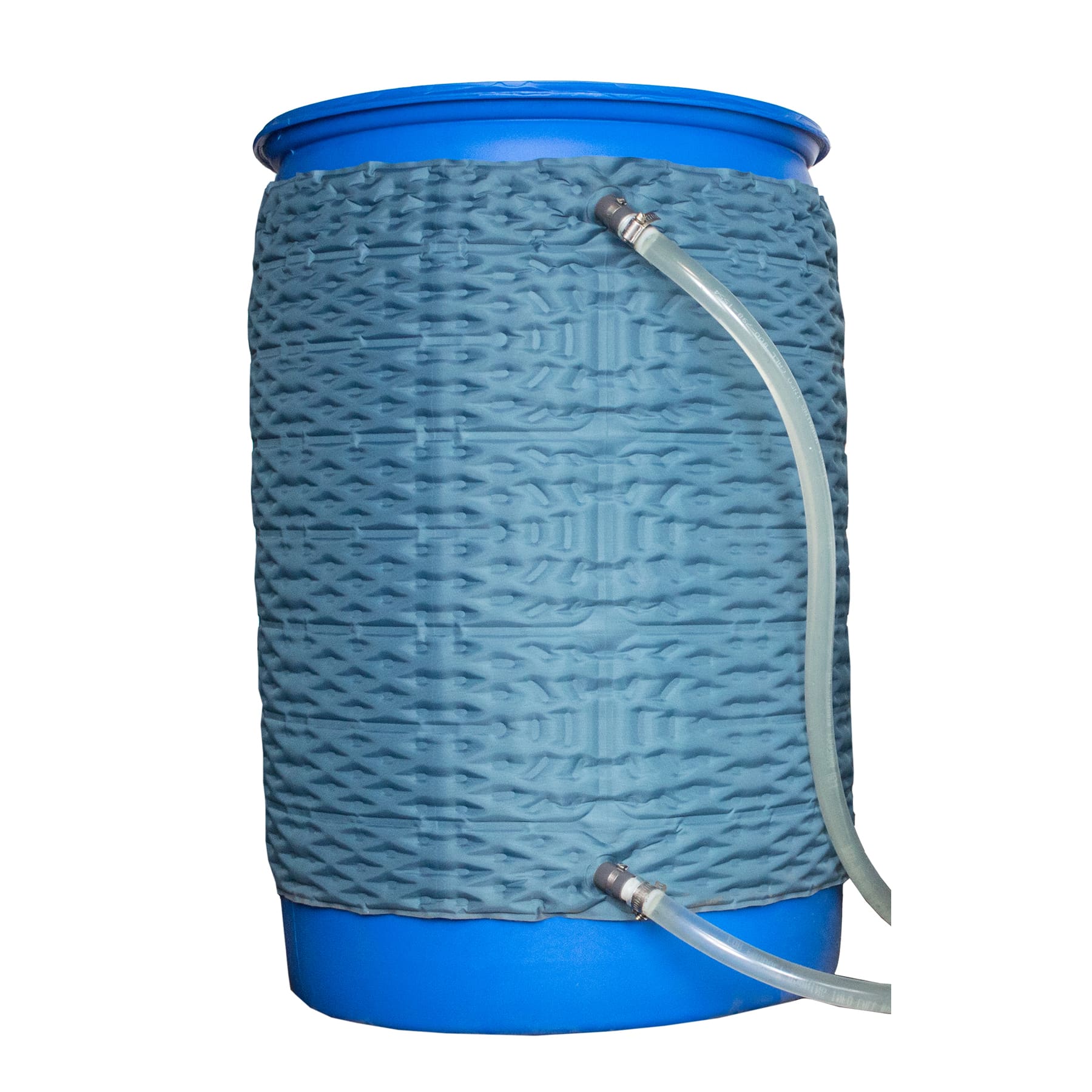
Glycol can be used in cooling wraps to help bring down temperatures to desired levels.
Glycol of both types are used in chillers as an antifreeze due to their low freezing points. Its use as a heat transfer fluid is unparalleled, but different industries use one or the other depending on the level of toxicity that they can handle. Food industries use propylene ethanol, as doing so won’t harm consumers, while ethylene glycol is preferred in industries where contamination is not a factor.
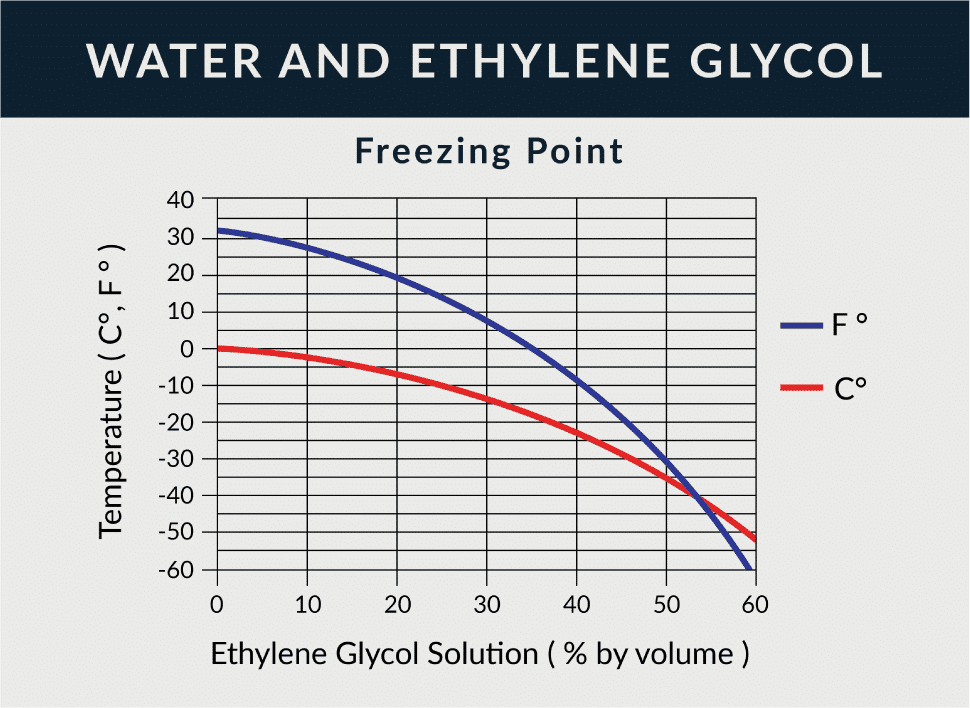
Ethylene glycol’s freezing point is much higher than propylene glycol. When ethylene is mixed with water, however, the freezing point drops considerably.
Find Your Chiller
North Slope Chillers offers the best in chiller technology, regardless of which type of heat transfer fluid you use. For more information about how North Slope Chillers can meet your cooling needs, call (866) 826-2993 or email sales@northslopechillers.com.
Frequently Asked Questions
What is the difference between propylene glycol and ethylene glycol?+
Propylene glycol is non-toxic and food-safe, making it suitable for food, beverage, and pharmaceutical cooling. Ethylene glycol is more efficient at heat transfer but is toxic and should only be used in closed industrial systems where there is no risk of product contact.
Does glycol reduce cooling efficiency?+
Yes, glycol has a lower specific heat capacity and higher viscosity than water, which reduces heat transfer efficiency. A 50% glycol mixture transfers about 20% less heat than pure water. Use the minimum concentration needed for your freeze protection requirements.
Can I mix different brands of glycol?+
It is not recommended. Different glycol products may use different corrosion inhibitor packages that are chemically incompatible. Mixing them can cause inhibitor depletion, accelerated corrosion, and gel formation in the system.
Ready to solve your cooling challenge?
Our team has helped thousands of businesses find the right chiller solution. Let us help you next.
Keep exploring: Fluids & Cooling Methods
This article is part of our Fluids & Cooling Methods resource collection. Browse all the guides in this topic.