
Need help choosing the right system?
Biotech laboratories rely on precise temperature control to initiate, stabilize, suspend, and stop sensitive chemical reactions. Experiment integrity, equipment protection, and lab-worker safety can all be compromised if precise temperatures are not met at precise times. Let’s take a closer look at a common piece of temperature control equipment used in biomedical research and production: cooling chambers.
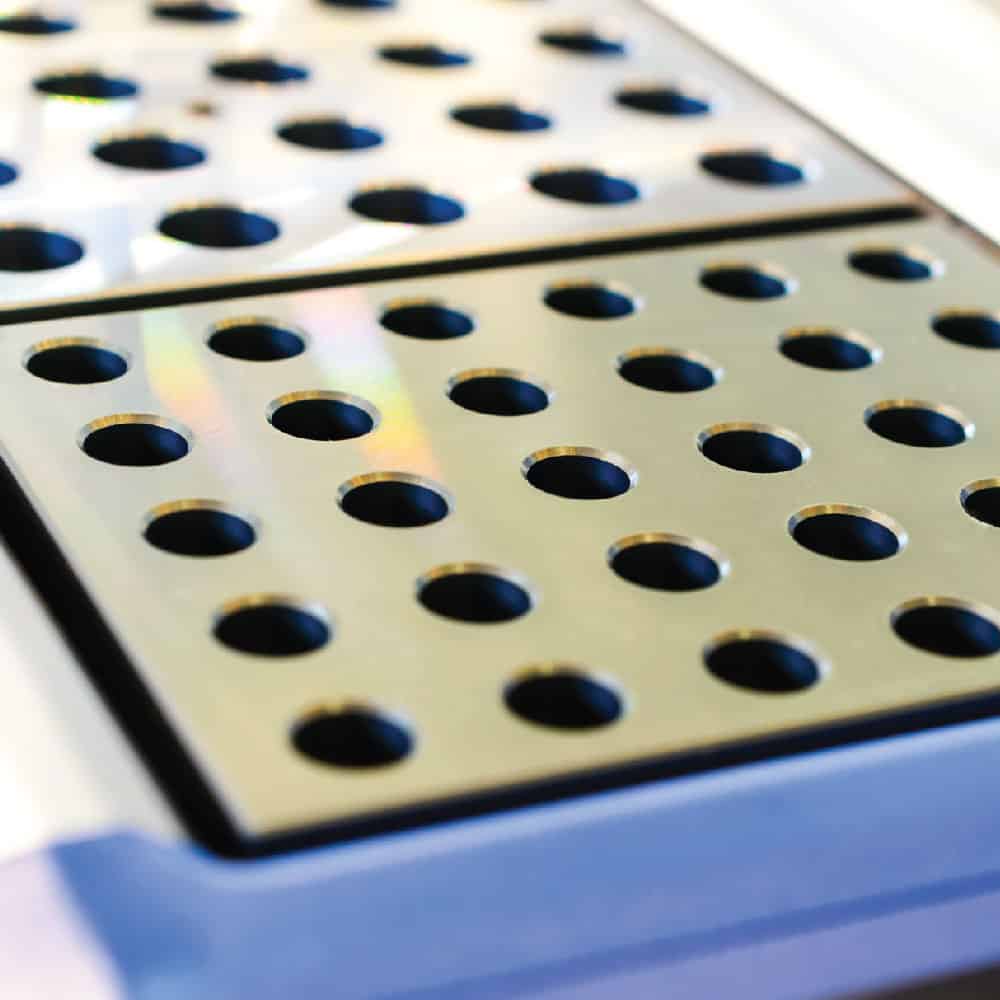
What Are Cooling Chambers?
Cooling chambers are anodized aluminum storage racks that are specifically designed to store and transfer sensitive liquids. They have grids of wells that can safely house configurations of different sized test tubes and vials while they are being chilled. The anodized aluminum prevents corrosion and ensures cold temperatures are sustained in each lab sample.
Running this application in your facility?
We've built custom cooling solutions for this exact use case. Let us design one tailored to your setup.
What Are Cooling Chambers Used For?
Aluminum cooling chambers are used in many different laboratory applications as samples are put through a process called thermal cycling.

Thermal Cycling
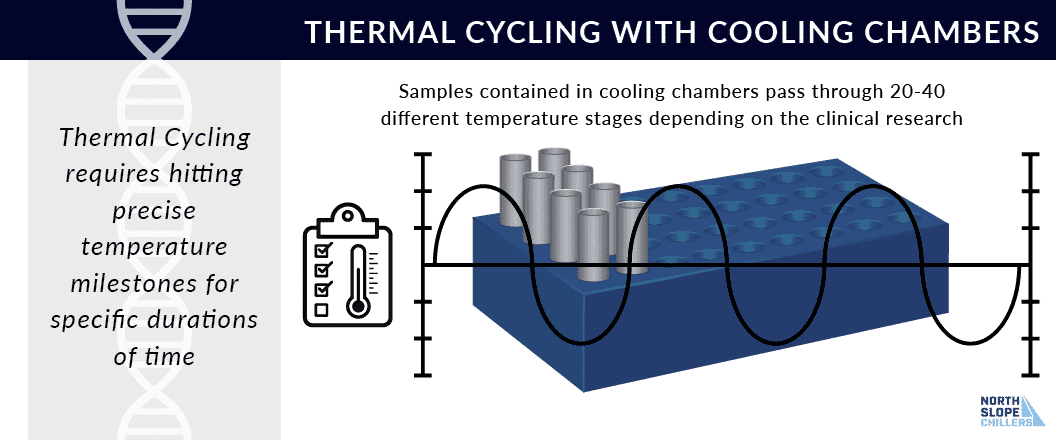
Clinical laboratory research requires meeting exact temperatures for exact periods of time in order to produce accurate results. Thermal cycling exposes reactants to repeated cycles of heating and cooling to start, stop, suspend, or stabilize chemical reactions. One of the most common uses for thermal cycling cooling chambers is a method called PCR (Polymerase Chain Reaction).
PCR
PCR was developed in 1993 by Kary Mullis as a precise method for copying strands of DNA. DNA strands are suspended in tubes of liquid and housed in aluminum cooling chambers while they are thermally cycled. The DNA goes through anywhere from 20-40 different temperature stages causing it to melt, elongate, bind, and reform as needed. Thermal cycling for PCR has become critical to many different industries from medical research to forensic analysis.
How Are Cooling Chambers Thermally Cycled?
Cooling chambers can be housed in many different types of containers as they hit their required temperature targets. These containers range from large fridge-like chambers that are specially calibrated for thermal cycling to small foam ice-chest sized boxes with cooling blocks that can be stored on a counter top.
Total Temperature Control From North Slope Chillers
North Slope Chillers offers portable, easy to install chillers that won’t disrupt your current setup. For more about our temperature control products, contact us: (866) 826-2993 or sales@northslopechillers.com
Frequently Asked Questions
What temperature range do biotech cooling chambers require?+
Biotech cooling chambers typically require precise temperature control between 35°F and 77°F (2°C to 25°C) for cell culture and incubation. Some applications like cryopreservation and cold storage require temperatures down to -20°F or lower.
How tight must temperature stability be for biotech applications?+
Most biotech processes require temperature stability within ±0.5°F to ±1°F. Cell culture, enzyme reactions, and assay incubation are particularly sensitive — even small temperature deviations can affect cell viability, protein folding, and experimental reproducibility.
Can portable chillers support GMP biotech environments?+
Yes, portable chillers with stainless steel fluid paths and precise temperature control can support GMP environments. They offer the advantage of dedicated cooling per chamber or bioreactor, eliminating cross-contamination risk from shared central chiller systems.
Ready to solve your cooling challenge?
Our team has helped thousands of businesses find the right chiller solution. Let us help you next.
Keep exploring: Applications
This article is part of our Applications resource collection. Browse all the guides in this topic.