
Need help choosing the right system?
Injection molds are wonderful things. You can create nearly any object using an injection mold, but knowing the difference between different cooling options will make all the difference.
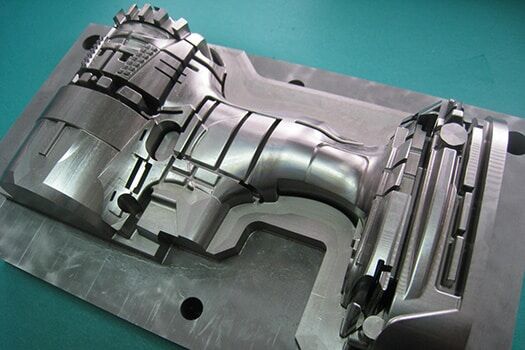 Conformal cooled mold for a power drill. Image from www.ogm.uk.com
Using injection molds to manufacture objects is a technology well-known across the world. Injection molds use cooling channels to allow molded objects to cool quickly, leading to faster turnaround times as more objects are quickly molded.
Know Your Cool
There are two types of cooling channels that are incorporated into injection molding: conventional and conformal.
Conventional
Conventional cooling, also known as standard cooling, consists of straight line cooling channels that are generally located in the center of the object, regardless of the object’s shape.
Conformal
Conformal cooling channels follow the shape of the interior of an injection-mold object.
Conformal is the obvious choice for most injection molds. Compared with conventional cooling channels, conformal cooling allows for greater heat transfer due to the cooling channels filling out more of the interior of the object. On the other hand, conventional cooling only cools outward from the inner center of the object, taking away less heat.
Running this application in your facility?
We've built custom cooling solutions for this exact use case. Let us design one tailored to your setup.
Save Time, Save Money
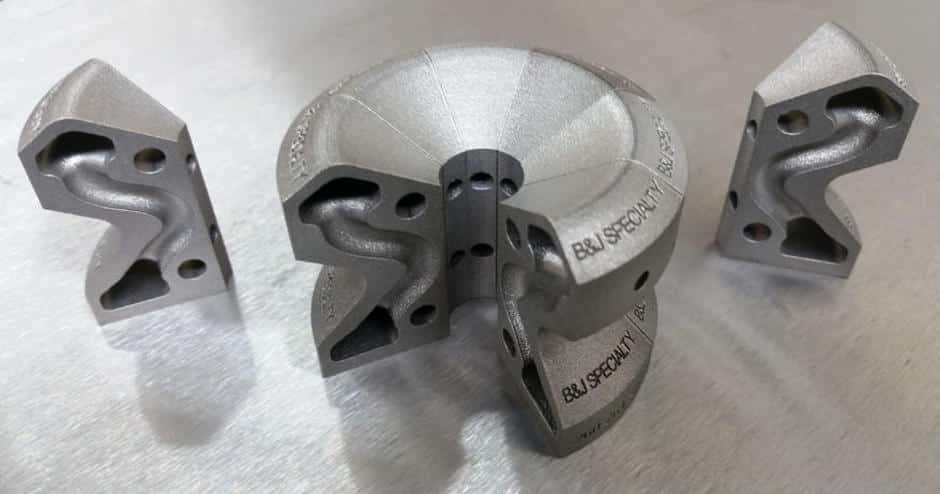
This injection mold contains a conformal cooling system. Notice how the cooling channels curve along the shape of the mold. Image from www.3dsystems.com
So why is this important? Because time is money. When your injection molded products need to cool, it takes a lot of time to come down from the high temperatures achieved during the injection process. The longer it takes to cool down, the longer it will be before you can get another mold made.
Several companies around the world have striven to perfect conformal cooling technology in their manufacturing processes, but none have been successful as The LEGO Group. In 2010, a study was completed by the toy company to see if conformal cooling was as effective as other methods when using injection molds to create LEGO brick elements. The survey revealed that conformal cooling was the method of choice. While its cooling effectiveness was matched by bronze inserts, conformal cooling proved to allow for higher quality bricks to be produced.
Complete Control
Maintaining control over temperatures is critical in any manufacturing environment. Trust North Slope Chillers to meet your cooling needs. For more information, call (866) 826-2993 or email sales@northslopechillers.com.
Frequently Asked Questions
What is conformal cooling in injection molding?+
Conformal cooling uses cooling channels that follow the contour of the mold cavity, maintaining a consistent distance from the part surface throughout. Unlike straight-drilled conventional channels, conformal channels provide uniform heat removal, reducing hot spots, cycle time, and part warpage.
How much does conformal cooling reduce cycle time?+
Conformal cooling typically reduces cooling time by 20–40% compared to conventional straight-line channels. In some complex part geometries, the reduction can exceed 50%. The improvement comes from eliminating hot spots where conventional channels cannot reach, ensuring all areas of the part cool at the same rate.
Does conformal cooling change chiller requirements?+
Conformal cooling channels typically have smaller cross-sections and longer paths than conventional channels, creating higher pressure drop. The chiller pump must deliver adequate flow at higher pressure. However, the more uniform heat removal often allows using a slightly smaller chiller or reducing coolant temperature.
Ready to solve your cooling challenge?
Our team has helped thousands of businesses find the right chiller solution. Let us help you next.
Keep exploring: Applications
This article is part of our Applications resource collection. Browse all the guides in this topic.