
Need help choosing the right system?
Injection molding is a manufacturing process wherein raw materials, most commonly thermoplastic resins in pellet form, are consecutively melted, remolded and cooled. This manufacturing method is typically used in mass-production processes were the same part is being produced thousands or even millions of times in succession. The components made through this process can be found on almost every product that you encounter– from automotive products and electronics to housewares and food packaging.
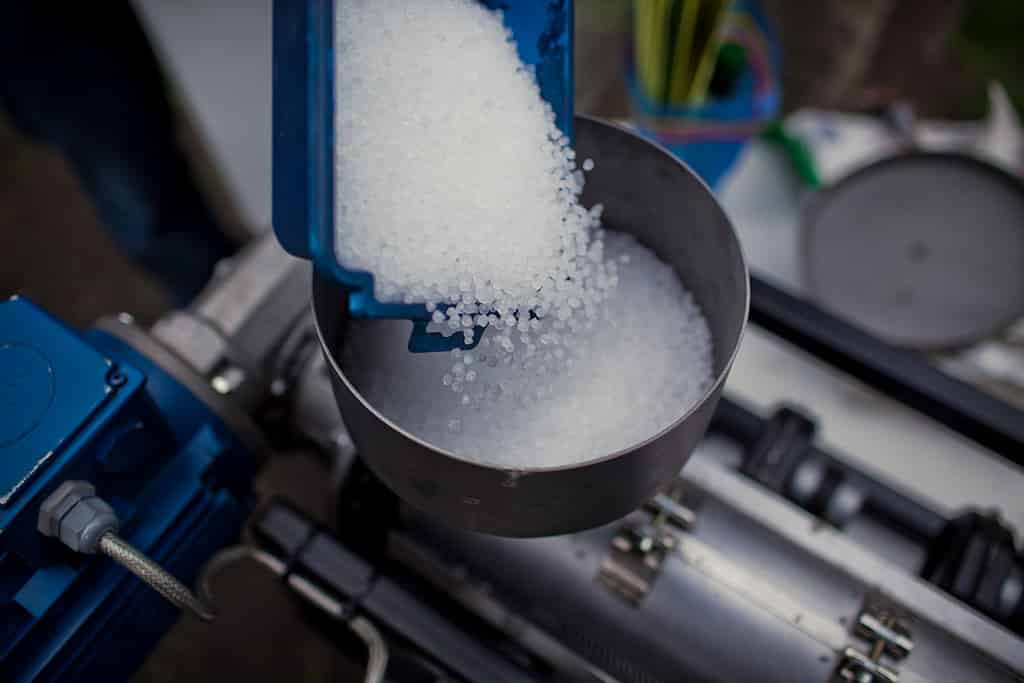
Cooling during Injection Molding
In the injection molding industry, process cooling covers an average 95% of the cycle time. After the end of the first stage of injection, the rest of the molding sequence is cooling. Processors, however, often disregard this critical phase of molding, which can result in a large loss of profit.
While heating and mold cooling are both extremely important during injection molding, cooling is much more critical. It is more difficult to ensure that cooling happens at an even, uniform rate and results in a high-quality product. When cooling is taken seriously and proper cooling tools are in place, manufacturers can reap some impressive benefits.
Benefits of Focusing on Cooling
Save Time and Money
When you have the right tools to heat and cool more quickly, the production process and cycle time can be completed in just a matter of days and requires fewer raw materials. This has the potential to save some serious money, especially on high volume production projects.
Running this application in your facility?
We've built custom cooling solutions for this exact use case. Let us design one tailored to your setup.
Product Uniformity
Having conformal mold cooling channels allow the coolant to access all part locations evenly. This can reduce the presence of any thermal stress defects such as warpage, sink marks, weld lines, etc.
Chemical Consistency
Cooling is vital because the thermoplastic resin doesn’t like to be molten for a long time. If this happens, changes in its chemical make-up will degrade and the plastic might become unusable. Utilizing a high-quality cooling solution will help ensure product integrity.
Scrap Rate Reduction
Efficient cooling reduces scrap rates. Temperature variation is minimized via conventional cooling channels. This helps ensure consistent, reliable, high-quality product.
North Slope Chillers’ injection molding chillers and Fluxwrap fluid channel blankets help you keep your process cooling temperatures under control.
We provide inexpensive and dependable cooling options specifically modeled with our customers’ needs and demands.

Frequently Asked Questions
How does chiller temperature affect injection mold cycle time?+
Lower coolant temperature removes heat faster from the mold, reducing the cooling phase which typically accounts for 60–80% of total cycle time. A 10°F reduction in coolant temperature can shorten cycle time by 10–15%, directly increasing part output and production efficiency.
What flow rate does an injection mold need?+
The general rule is turbulent flow through every cooling channel — typically 2–4 GPM per cooling circuit. Reynolds number above 10,000 ensures turbulent flow for maximum heat transfer. Laminar flow (low Reynolds number) reduces heat transfer by up to 50%, creating hot spots and longer cycle times.
Should each injection mold have its own chiller?+
Dedicated chillers per mold allow independent temperature setpoints, which is ideal for multi-material or multi-process operations. However, for shops running similar molds at similar temperatures, a central chiller with individual flow controls can be more cost-effective.
Ready to solve your cooling challenge?
Our team has helped thousands of businesses find the right chiller solution. Let us help you next.
Keep exploring: Applications
This article is part of our Applications resource collection. Browse all the guides in this topic.