
Need help choosing the right system?
Running this application in your facility?
We've built custom cooling solutions for this exact use case. Let us design one tailored to your setup.
Wrap Up To Stay Cool
Whether you are wine making, distilling, or brewing, temperature control during the fermentation stage is crucial. Keeping fermentation chambers within specified temperature zones ensures ideal flavors, colors, aromas and alcohol levels in your drinks.
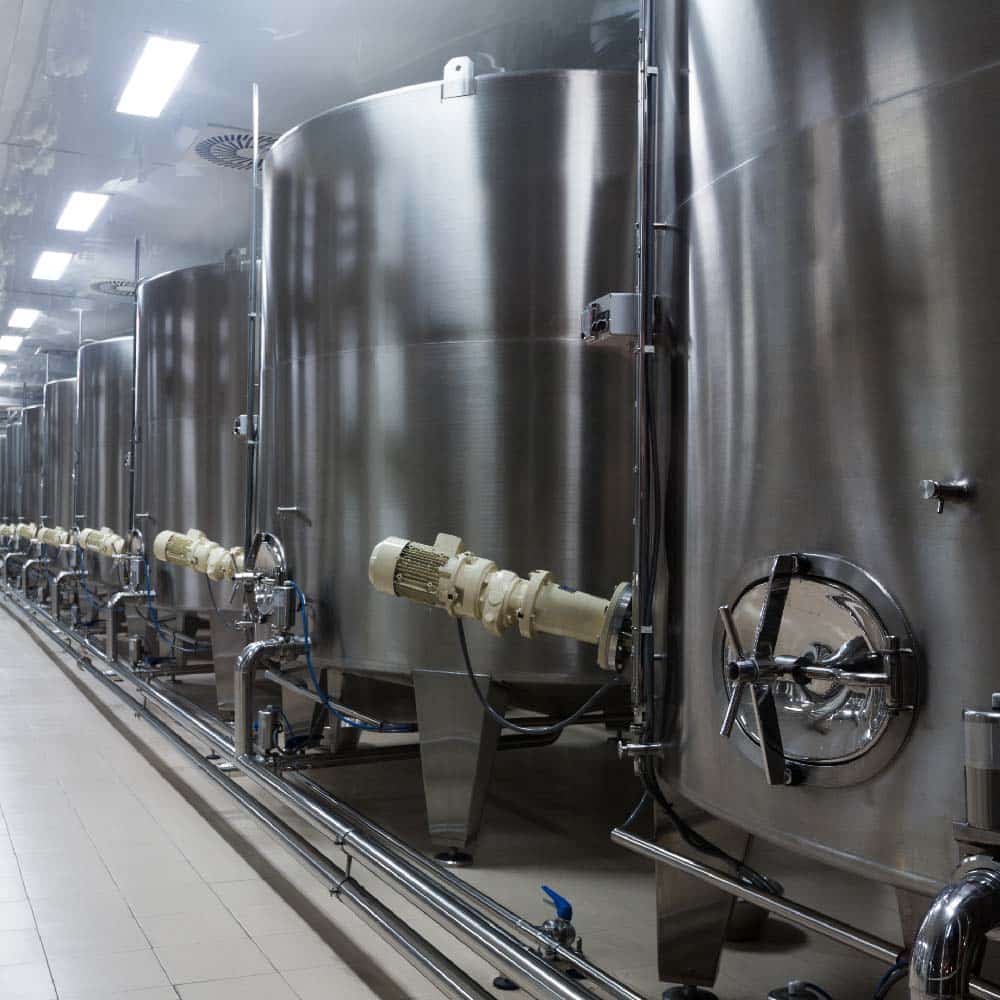
Fermentation containers come in all shapes and sizes: from massive steel chambers, to medium conical fermenters, all the way down to small car-boy fermenters for small batches and home brewing.
The methods of cooling these chambers are as varied as the fermentation containers themselves. These chilling methods can be approached from two directions: inside or outside.
Cooling From The Inside
Some fermentation chillers involve inserting a cooling rod or coil down into your fermenting liquid. These devices then cool the liquid through direct contact. Cooling a fermentation container from the inside comes with added risks. Anytime a tool or device is inserted into your fermenting liquid, you risk exposure to unwanted microorganisms (such as wild yeasts) that can alter flavors, as well as bacteria, potentially tainting your drink. Opening a fermentation chamber to insert cooling devices also increases the change of oxidization spoilage.
Using this cooling method also greatly decreases the chilling efficiency. Fermentation liquid is exposed to a much smaller cooling surface area, leading it to not cool as effectively, especially for medium to large batches. This also increases the risk of hot and cool spots in the fermenting liquid, making it harder for the yeast to finish the fermentation process.

Cooling From The Outside
Chilling fermentation chambers from the outside is the most effective method. No matter the diameter of your fermenting container, the outside surface area will always be greater than cooling from the inside. Putting the chilling source in direct contact with the fermentation container will produce the best results due to uniform thermal flow from the container to the chiller. As fermenters come in all shapes and sizes, cooling sources should be as flexible as possible to ensure complete contact with the container.
North Slope Chilling Solutions
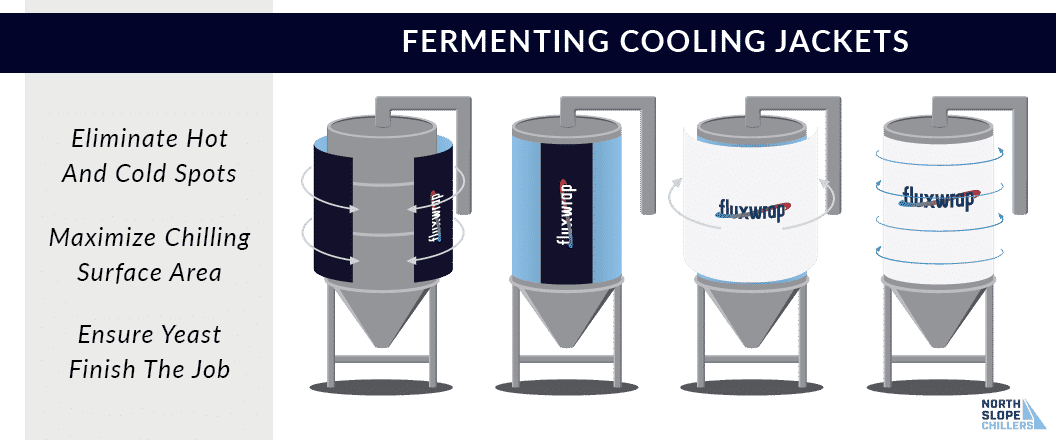
Fermentation cooling jackets that completely wrap around your fermenter will give you the most direct cooling contact. Insulated Fluxwrap jackets from North Slope Chillers have multiple channels of cooling liquid evenly distributed around your fermentation chamber. Their adjustable temperature range will eliminate hot or cold spots and keep your yeast happy and fermenting. Fluxwrap is easy to install without opening your fermenting container and flexibly fits a wide variety of container shapes and sizes.
Contact us to find the right fermentation cooling solution for your needs:
(866) 826-2993 sales@northslopechillers.com
Frequently Asked Questions
What types of fermentation cooling jackets are available?+
The main types are welded dimple jackets (built into the tank at manufacturing), bolt-on half-pipe jackets (permanently attached), and flexible wraps like Fluxwrap (portable, removable). Dimple jackets offer the best heat transfer but cannot be added to existing tanks, while flexible wraps can retrofit any vessel.
How much cooling surface area does a fermentation tank need?+
Generally, 40–60% of the tank's cylindrical surface area should be covered by the cooling jacket for effective fermentation temperature control. Conical-bottom fermenters also benefit from cone cooling for crash-cooling and yeast harvesting. Insufficient jacket coverage leads to temperature stratification inside the tank.
Can cooling jackets both heat and cool a fermenter?+
Yes, the same jacket that circulates cold glycol for cooling can circulate warm glycol for heating. This is useful for raising diacetyl rest temperatures, warming a fermenter for yeast pitching in cold weather, or maintaining temperature during malolactic fermentation in wine — all using the same glycol system.
Ready to solve your cooling challenge?
Our team has helped thousands of businesses find the right chiller solution. Let us help you next.
Keep exploring: Applications
This article is part of our Applications resource collection. Browse all the guides in this topic.