
Need help choosing the right system?
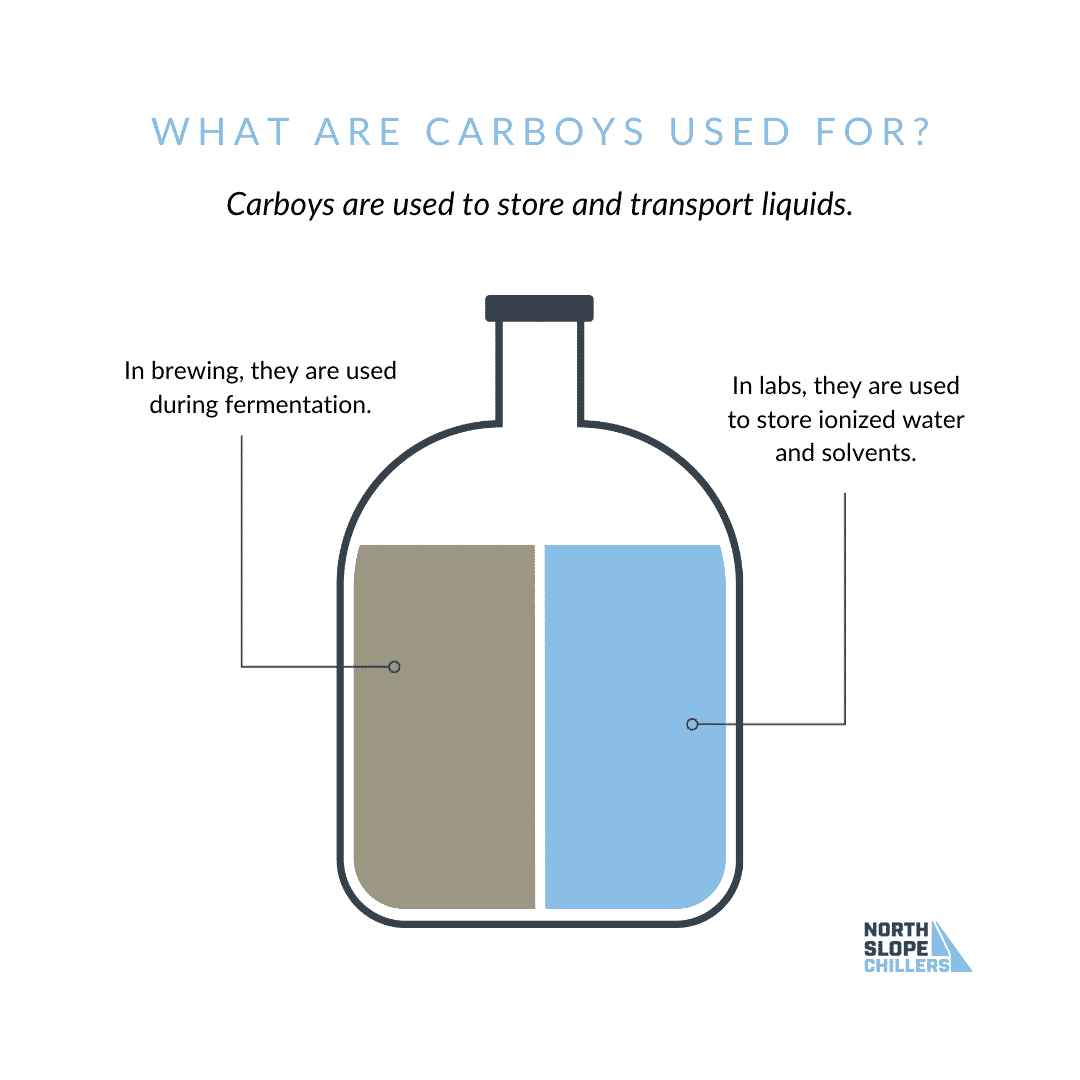
Carboys are really nothing fancy: just a large plastic or glass container, usually with a narrow neck and opening. It’s what’s on the inside that’s important. Carboys are often used in lab settings to store ionized water and solvents and in brewing for fermentation. In each of these applications, carboys may require some assistance in keeping their contents cool. While there are several cooling methods to choose from, some are easier to use and more precise than others.
What is a carboy?
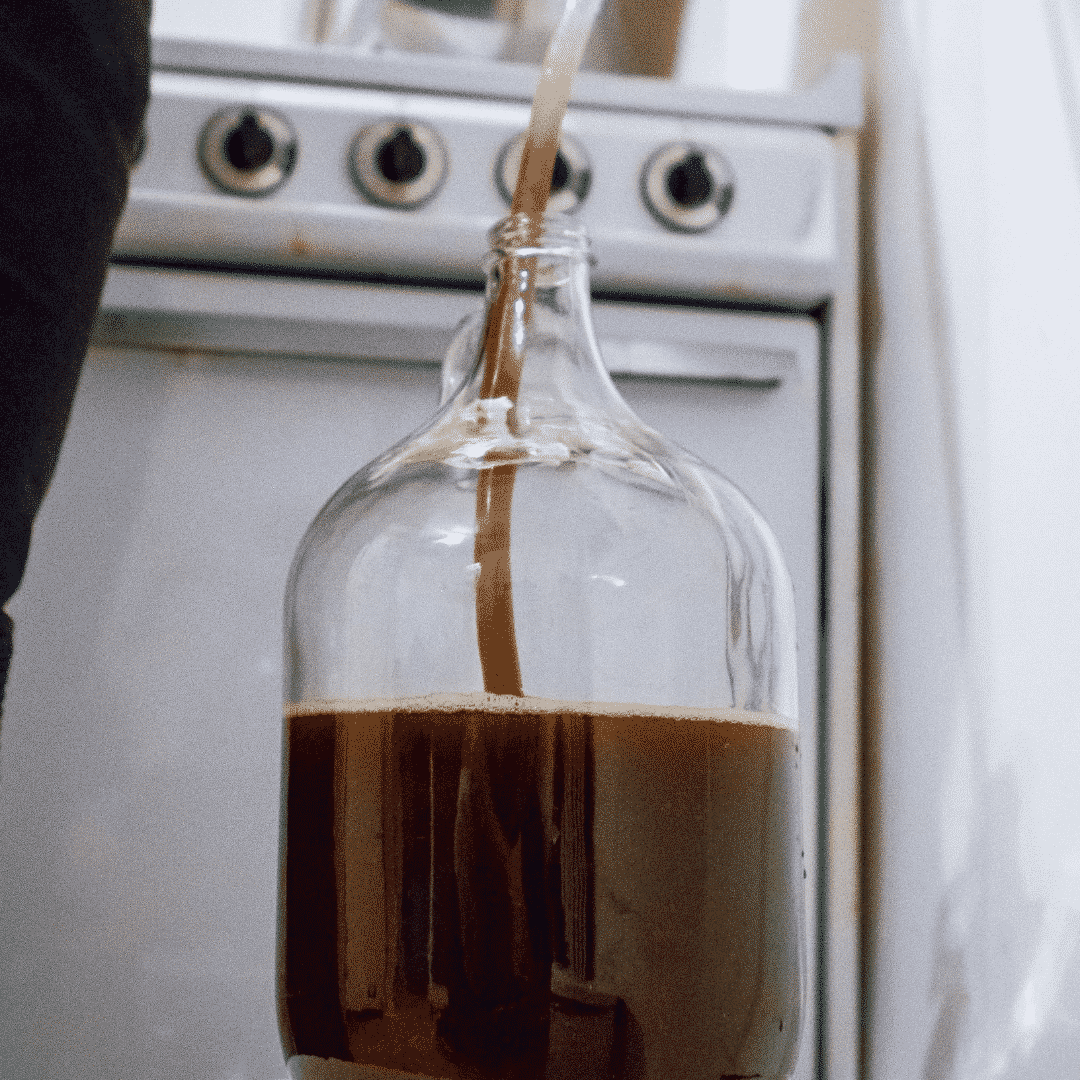
A carboy, also called a demijohn, is a large glass or plastic container with a narrow neck. These containers typically have a capacity of about 1 to 6 gallons. Most often, carboys are used to store and transport liquids like water and chemicals. They are also used for home brewing of beer and wine during the fermentation process.
Carboy Sizes and Terms
Standard carboy sizes range from range 1.1 to 6.6 gal (4 to 25 L). The term carboy itself most often refers to a 5 gal (19 L) carboy. A 1.2 gal carboy (4.5 L) carboy is sometimes called a jug. A 15 US gal (57 L) carboy is usually called a demijohn.
Carboys and Brewing
Glass carboys are king during the fermentation of alcoholic beverages like wine, mead, cider, and beer. They are typically fitted with a rubber stopper and a fermentation lock during this process to prevent bacteria and oxygen from entering.
While a primary carboy is used during the fermentation step of homebrewing, a secondary carboy is sometimes used for the following step: conditioning, or secondary fermentation. Beer can also be transferred directly to bottles for this step.
Running this application in your facility?
We've built custom cooling solutions for this exact use case. Let us design one tailored to your setup.
Carboys for Laboratory Use
In laboratory settings, carboys are used to store liquids like solvents and deionized water. These carboys often have a spigot near the bottom for east dispensing. Today, laboratory carboys are most often made out of polypropylene but traditionally have been made from ferric and other shatter-resistant glasses. Plastics today, however, offer immunity to acid corrosion and halide staining, both traits that were missing from older plastic formulations.
Besides carboys, other common large-quantity liquid containers in laboratories are Jerry cans, bottles, jars, and bucket-like containers.
Carboy Cooling
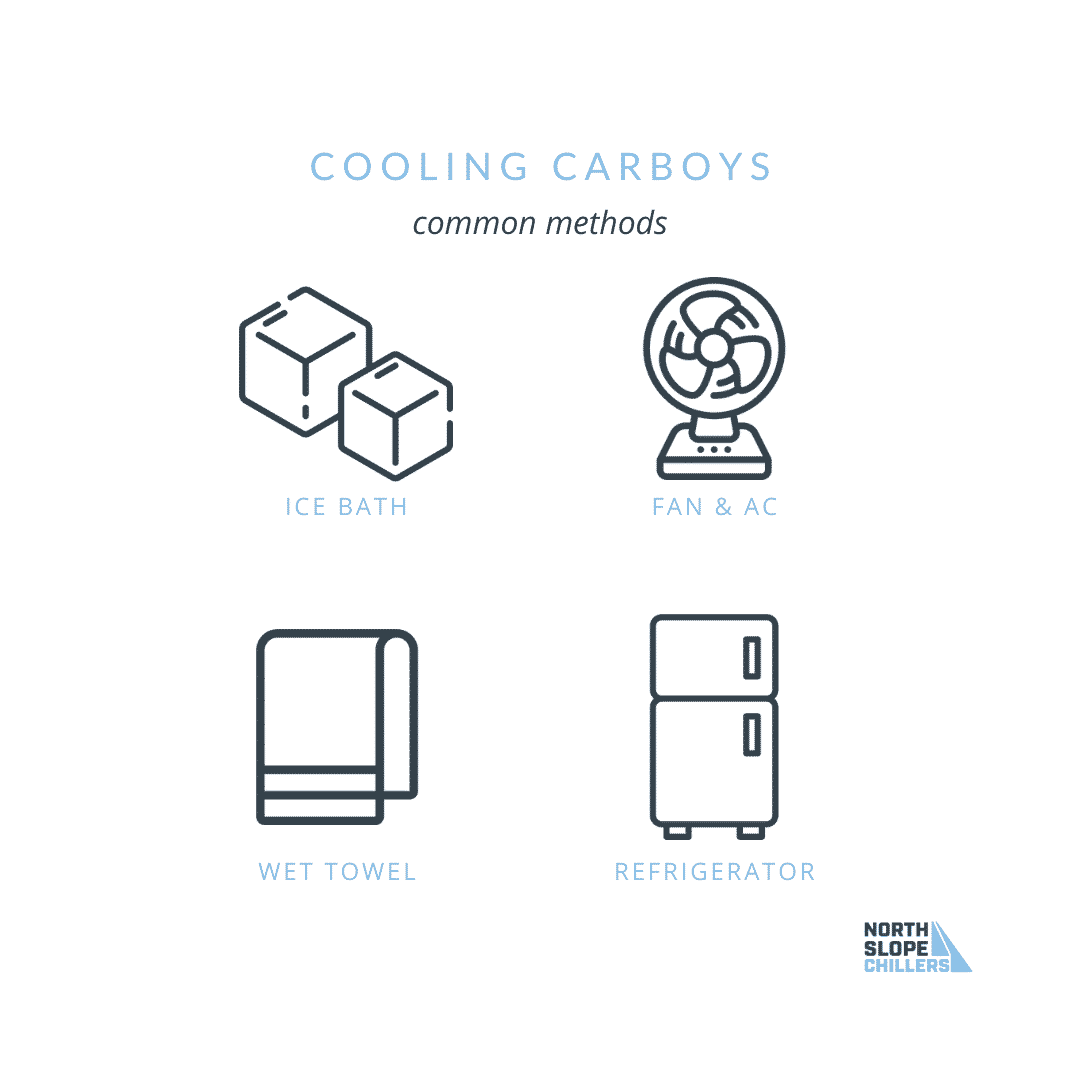
Ambient Air
In laboratory settings, carboy contents most often rely on carefully controlled ambient air to maintain a proper temperature.
Refrigerators
Also in laboratories, when carboys contain liquids that require lower temperatures, the containers can be placed in lab refrigerators. This is, of course, limited by the size of both the carboy and the refrigerator.
Using a Cool Towel
In home brewing, using a wet towel is the most common trick for taking the corboy temperature down a notch or two. This method takes advantage of the cooling effects of evaporation.
A wet towel is wrapped around the carboy and held in place with a tie or bungee cord. Additionally, the carboy is often placed in a basin containing an inch or two of water. The water is gradually and continually wicked into the towel as evaporation occurs.
While this method is extremely affordable and fairly simple, it requires regular monitoring and doesn’t offer precise temperatures.
Ice Bath
For this cooling method, the carboy is placed in a basin with enough water to surround most or all of it. Ice is added as needed to maintain the target temperature. This method is simple but requires a bit of figuring out to avoid any drastic temperature swings.
Ice box
This method utilizes an insulated box and blocks of ice. The boxes can be made from cardboard, plywood, etc, and are often lined with styrofoam or builders insulation. The ice blocks are periodically replaced to help maintain the target temperature. Like ice baths, this method requires a bit of messing around to get the hang of it. It requires frequent monitoring for the first several hours to determine how much ice is needed and how often it will need to be rotated.
Fan and Air Conditioning
This method simply takes advantage of any nearby air conditioning units that are already running. Either a vent is directed toward the carboy, or a fan is used to help direct the chilled air. This is another extremely simple method; however, it offers little precision.
Specialized Chillers
Specialized chillers are available for both laboratory and homebrew applications. This option offers the advantage of more precise temperature control and typically involves less hands-on work than other cooling methods.
Cooling Carboys with Fluxwrap
Fluxwrap works to keep carboys cool via a proprietary multi-channel fluid path within its layers. The blanket-like device is wrapped around the carboy and cooling liquid flows through the fluid path, absorbing unwanted heat from the carboy. The wrap conforms to the shape of any carboy, even uneven surfaces, creating full-coverage cooling.
Unlike traditional carboy cooling methods, Fluxwrap is extremely easy to install and doesn’t require constant monitoring, rotating, or adjusting. It also takes away the guesswork and ensures target temps.
Fluxwrap offers the best of everything: simplicity, ease of use, and precise temperature control.
For more info on Fluxwrap, or if you have any questions about carboy cooling, give us a call at (866) 826-2993.
Frequently Asked Questions
What size chiller do I need for a carboy?+
A 1/3-ton chiller is typically sufficient for cooling one or two 5–6 gallon glass carboys during fermentation. For multiple carboys or aggressive temperature pull-downs, a 1/2-ton unit provides additional headroom. Pair the chiller with a 5-gallon Fluxwrap for direct contact cooling.
How do you cool a glass carboy without damaging it?+
The safest method is wrapping the carboy with a Fluxwrap cooling jacket, which provides gentle, even cooling across the entire surface. Avoid rapid temperature shocks — glass carboys can crack if subjected to sudden temperature changes. A chiller with gradual setpoint ramping prevents thermal stress.
What fermentation temperature should a carboy be kept at?+
For most ales, maintain 64°F–72°F. For lagers, 45°F–55°F. Wine fermentation in carboys typically runs 55°F–65°F for whites and 70°F–80°F for reds. The carboy's small volume makes it more susceptible to ambient temperature swings, making active cooling especially important.
Ready to solve your cooling challenge?
Our team has helped thousands of businesses find the right chiller solution. Let us help you next.
Keep exploring: Applications
This article is part of our Applications resource collection. Browse all the guides in this topic.