
Need help choosing the right system?
Cutting Edge Cooling
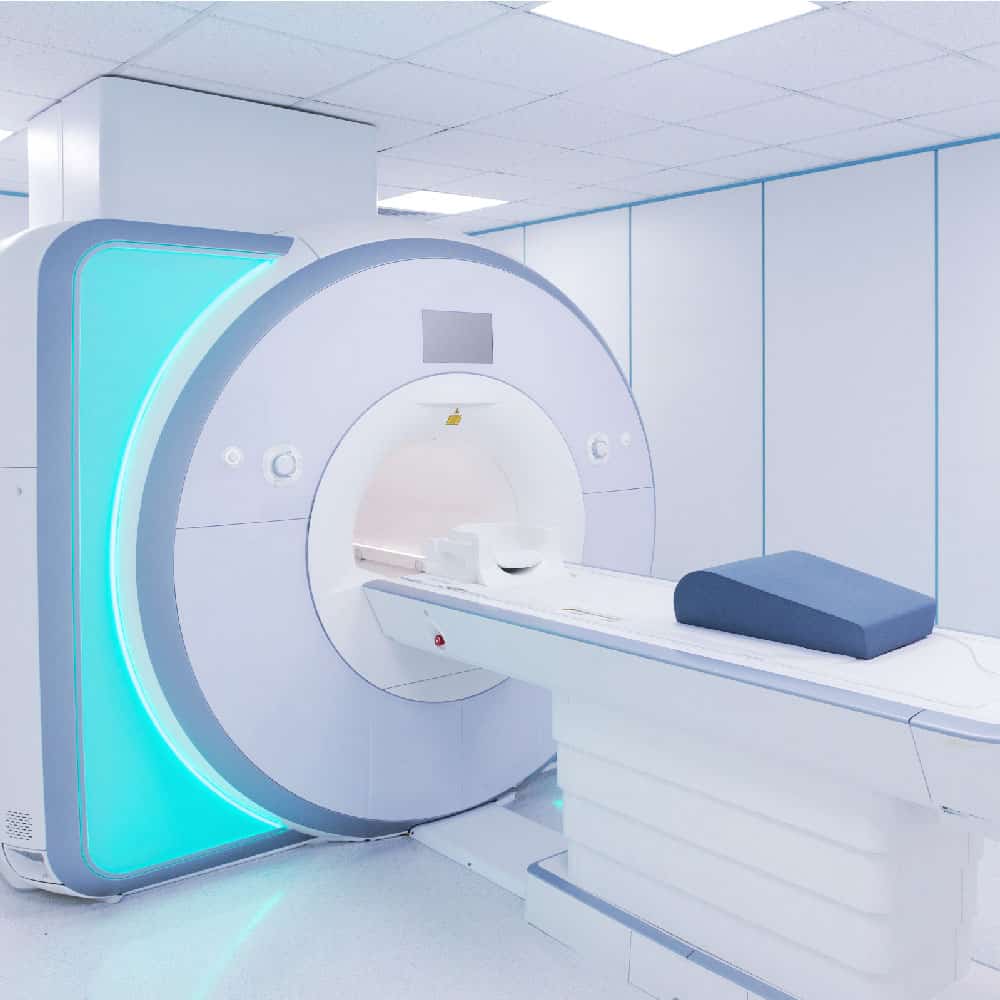
Magnetic Resonance Imaging (MRI) machines are among the most valuable pieces of equipment in a hospital’s possession; not just in terms of cost, but also in terms of versatility. Providing patients with a complete image of their internal systems is an important step in diagnosing and treating a wide number of health problems. As a complicated piece of machinery, an MRI machine has incredibly specific cooling needs to keep it operational.
MRI Room Cooling Needs
If you have ever walked into an MRI room, either for yourself or to assist another patient, you know it is not the most comfortable place to be. Cooling the ambient air in an MRI room not only protects the equipment from heat stress, but also provides patients with added comfort during a lengthy and sometimes stressful medical procedure.
The magnets used in an MRI machine are incredibly powerful and can put off a lot of heat. Excessive heat within the machinery itself can lead to costly helium leaks as well as inaccurate image results for the patient.
Running this application in your facility?
We've built custom cooling solutions for this exact use case. Let us design one tailored to your setup.
What Does an MRI Chiller Need?
Industrial chillers typically consist of a compressor, evaporator, expansion valve, and a condenser. MRI chillers require a few additional components to effectively cool an MRI machine.
Advanced Temperature Controller
MRI chillers are highly specialized for a number of reasons. MRI machines do not operate at a constant, even power load. Their power usage and heat output ramp up quickly, so an effective MRI chiller needs to be able to dissipate that heat just as quickly.
The most effective MRI chillers are accompanied by a top of the line microprocessor that can react quickly to the shock of rapid load surges and keep temperatures under control.
Scroll Compressors
Industrial chillers have different compressor types available to them: centrifugal, screw, reciprocating, and scroll. MRI chillers most commonly include a scroll compressor because they operate at lower sound and vibration levels. On their own, MRI machines operate so loudly that patients are provided with ear protection. Operating a quieter MRI chiller reduces the sonic stress for hospital staff and patients.
Emergency By-pass Valve
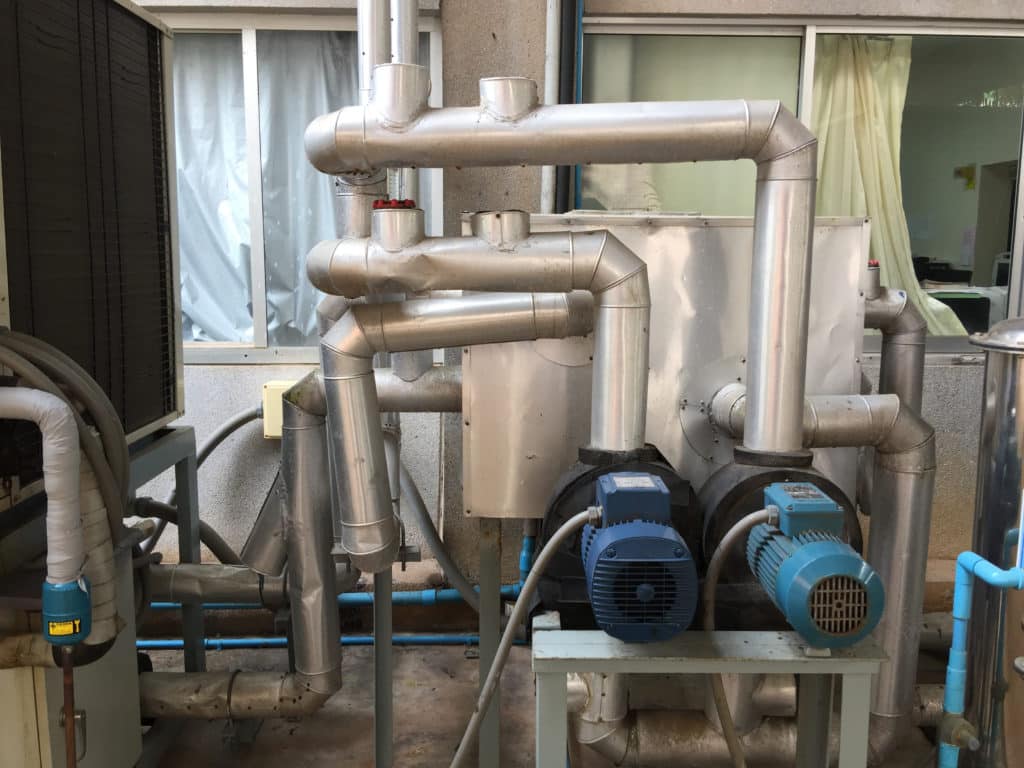
MRI Chiller with city by-pass valve
Hospitals cannot afford to go dark if any power interruption occurs. Most hospital systems have emergency generators that can keep life-saving machinery up and running. However, MRI chillers require both electricity and water supply. MRI chillers needs to have a bypass valve that allows them to switch over to city water flow in the event of an emergency. This emergency by-pass valve ensures that MRI equipment is provided with cooling under any circumstances.
Medical Cooling From North Slope Chillers
In the bio-medical industry, process cooling should never be an afterthought. Hospitals need reliable chilling to protect patients, lab samples, and critical equipment. North Slope Chillers portable industrial chillers provide essential cooling for a wide variety of bio-medical needs. Contact us about your bio-medical chilling needs: (866) 826-2993 sales@northslopechillers.com
Frequently Asked Questions
Why do MRI machines need dedicated chillers?+
MRI machines use superconducting magnets cooled by liquid helium at -452°F. A chiller removes heat from the helium compressor and gradient coil cooling system to prevent quench events (loss of superconductivity) that can cost $50,000–$100,000 in helium replacement and weeks of downtime.
What happens if an MRI chiller fails?+
If the chiller fails, the helium compressor overheats and shuts down. Without active cooling, helium slowly boils off, raising magnet temperature. If not resolved within hours, a quench occurs — the magnet loses superconductivity, helium vaporizes explosively, and the MRI is offline for days to weeks while the magnet is re-cooled.
What redundancy is required for MRI cooling?+
Most MRI installations require a backup chiller or redundant cooling path to prevent quench during primary chiller maintenance or failure. Hospitals typically maintain a portable chiller on standby or install a dual-chiller system with automatic switchover to ensure continuous magnet cooling.
Ready to solve your cooling challenge?
Our team has helped thousands of businesses find the right chiller solution. Let us help you next.
Keep exploring: Applications
This article is part of our Applications resource collection. Browse all the guides in this topic.