
Need help choosing the right system?
Grapes take quite a journey from vine to wine. Depending on the type of wine, that journey can be a lengthy one. A lot of different factors influence the quality of a finished wine, and temperature control is the key to ensuring wine finishes that journey.
Fermentation Temperature Control
Fermentation is an exothermic, or heat-producing, process. As yeast breaks down sugars into carbon dioxide and alcohol, temperatures inside your fermenter will continue to rise. As temperatures climb, the fermentation process speeds up and the result is a run-away chemical train that disrupts flavors, aromas, colors, and alcohol content.
“The Goldilocks Zone”
Like the storybook character, fermentation yeasts are happiest when conditions are just right, not too hot and not too cold. If fermentation temperatures are too high, wines can develop a “cooked” flavor, emit unpleasant aromas, and leave your desired alcohol level behind. If fermentation temperatures are too cold yeast can go dormant, alcohol production will stop, and bacteria or mold can can begin to grow.

Red Wines
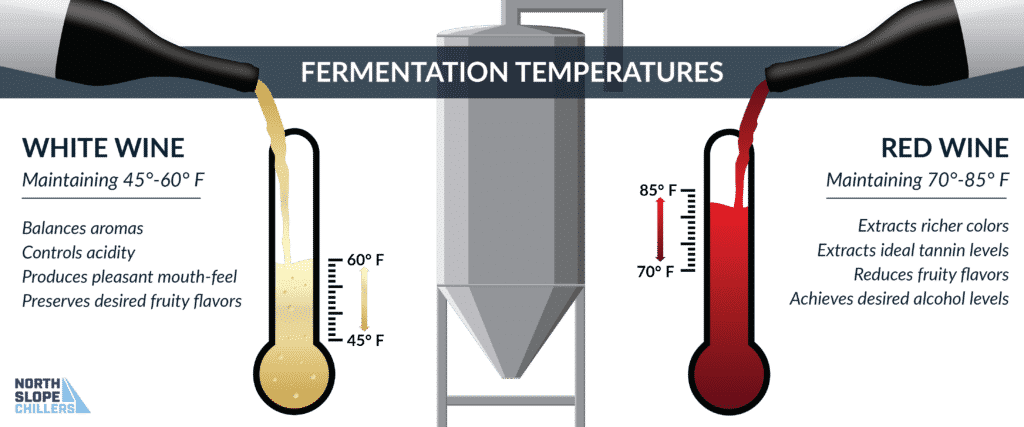
According to top yeast producer Wyeast Laboratories, red wines should ferment between 70° and 85° F. This temperature range not only ensures the yeast finishes the fermentation process but also protects all of the elements that comprise a high-quality red wine. These temperatures are ideal to extract the desired color and tannins from the grapes.
Tannins are bitter or astringent compounds that are found in many plants including grapes, and the oak used in wine aging barrels. Tannins produce that drying mouth feel when you drink red wine. Temperature control ensures that tannin levels are carefully managed, and the resulting astringent feel in your mouth can be pleasant and not harsh.
White Wines
Running this application in your facility?
We've built custom cooling solutions for this exact use case. Let us design one tailored to your setup.
According to Wyeast, white wines should be fermented at a lower temperature than reds, between 45° and 60°F. This cooler temperature range means a slower fermentation process that preserves the qualities one looks for in a white wine. These temperatures keep acidity levels under control, protect temperamental aromas, and produces the desired mouth-feel and fruity flavors associated with white wine.
Wine Aging and Storage Temperatures
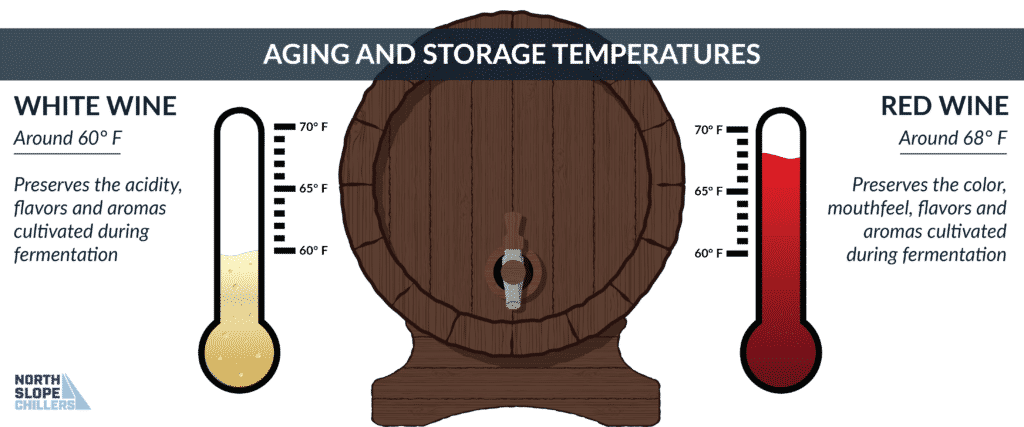
Once fermentation is complete, wine enters the storing and aging stage. Again, according to the experts at Wyeast, the ideal temperature for red wines is around 68° F. White wines should be aged and stored at 60°F. Storing wines at their correct temperatures preserves the flavors you worked so hard to cultivate.
When storing wine, the aging barrels and containers should stay put as much as possible so as to not stir up sediment and adversely affect the texture. Process cooling solutions can bring the temperature control straight to the barrel and keep the wine resting.
Temperature Control Methods
There are a wide variety of temperature control methods used in wine making: from water and ice baths, to insulation jackets, and expensively air conditioning entire rooms just to keep yeast in the “goldilocks zone.” These methods require a lot of attention and maintenance and lack efficiency.
North Slope Chillers Wine Temperature Solutions
Wyeast laboratories lists fluid channel blankets as “the most effective and efficient method of temperature control.” North Slope Chillers’ Fluxwrap fluid channel blankets apply direct and even temperature control throughout the entire fermentation process. For larger wine operations, fermentation chillers are the ideal method for keeping fermentation chambers and storage barrels in their ideal range. Portable glycol chillers from North Slope Chillers are an efficient and economic way to protect your wines through fermentation, aging, and storage.
Contact us to find the right wine temperature control solution for your needs:
Call (866) 826-2993 or email sales@northslopechillers.com
Frequently Asked Questions
What is the ideal fermentation temperature for red wine?+
Red wine fermentation typically occurs between 70°F and 85°F. Higher temperatures extract more color and tannin from the grape skins, while lower temperatures preserve fruit character. Most winemakers target 75°F–80°F for balanced extraction.
What is the ideal fermentation temperature for white wine?+
White wine is usually fermented between 45°F and 60°F to preserve delicate aromas and fruit character. Cooler fermentation slows yeast activity and retains volatile aromatic compounds that would be lost at higher temperatures.
How should wine be stored after fermentation?+
After fermentation, wine should be stored at 55°F–60°F for aging. Consistent temperature is more important than hitting an exact number — temperature swings cause the wine to expand and contract, potentially pushing past the cork and introducing oxygen.
Ready to solve your cooling challenge?
Our team has helped thousands of businesses find the right chiller solution. Let us help you next.
Keep exploring: Applications
This article is part of our Applications resource collection. Browse all the guides in this topic.