Need help choosing the right system?
As much as we’d love technology to run at maximum efficiency 100% of the time, regular wear and tear can lead to malfunctions. If your business owns or regularly uses a chiller unit, it could be helpful to familiarize yourself with these chiller repairing and maintenance steps.
When it comes to process chiller repair and maintenance, it is necessary to know and understand how chiller systems work. Here are a few helpful tips that can help keep your chiller running efficiently:
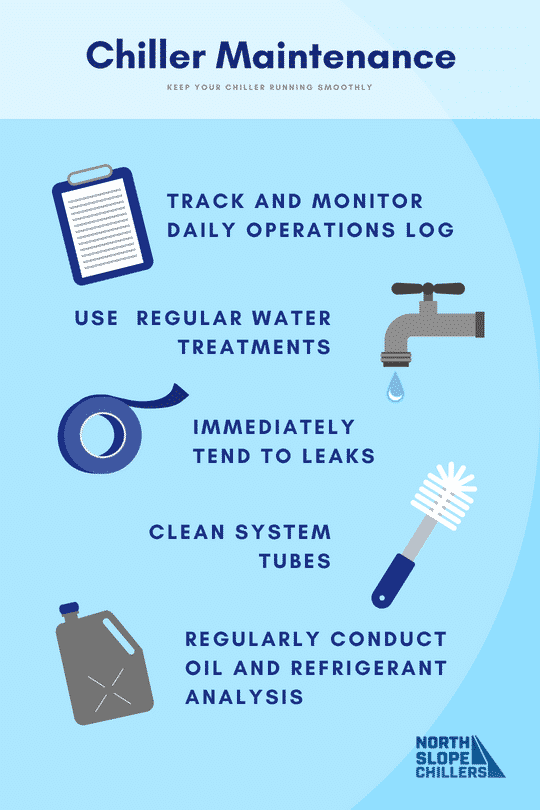
1. Track and Monitor Daily Operations Log
A daily operations log provides supporting data to help isolate problems and fix inefficiencies faster. Details under the log should include flow rates, operating temperatures, and other crucial information. Keeping a detailed log takes just a few minutes a day and could be the key you need to get things up and running again should a problem arise.
2.Use Regular Water Treatments
There are many different types of chillers used in different situations, but the most common are water chillers, or water-cooled chillers. Water in the units must be frequently treated to prevent corrosion, scale accumulation, and algae growth. For closed water systems use regular chemical treatments. Filters should be cleaned every three months to prevent contaminant buildup.
3. Immediately Tend to Leaks
Small leaks in your chiller system can lead to more serious issues. Unwanted moisture could contribute to the formation of corrosive acids. Additionally, moisture could cause chiller parts to rust and stop working properly. Carefully check your unit at least once quarterly for leaks.
4. Clean System Tubes
Overall system productivity depends upon the efficiency of heat transfer in the evaporator and condenser tubes. Keeping these tubes clean will help keep your chiller running smoothly. Cleanings are done through brushing or applying chemicals to remove algae and scale accumulation.
5. Regularly Conduct Oil and Refrigerant Analysis
Regularly analyzing the oil and refrigerant within your system can help prevent more complicated issues. Consistent refrigerant analysis can help detect contamination issues. Oil analysis can expose underlying problems such as problems with compressor wear or excess moisture content in the oil.
Chiller giving you trouble?
Our technicians can diagnose the issue and get your system running at peak performance — fast.
When chiller units malfunction or breakdown, try following these common chiller problems solutions:
-
If your pump runs irregularly, check that all valves are open to the chiller. Next, check for possible debris entering the pump. If everything looks clean, check that the pressure is within the normal range. If all looks well there, there could be a possible problem with the pump component that requires professional attention.
-
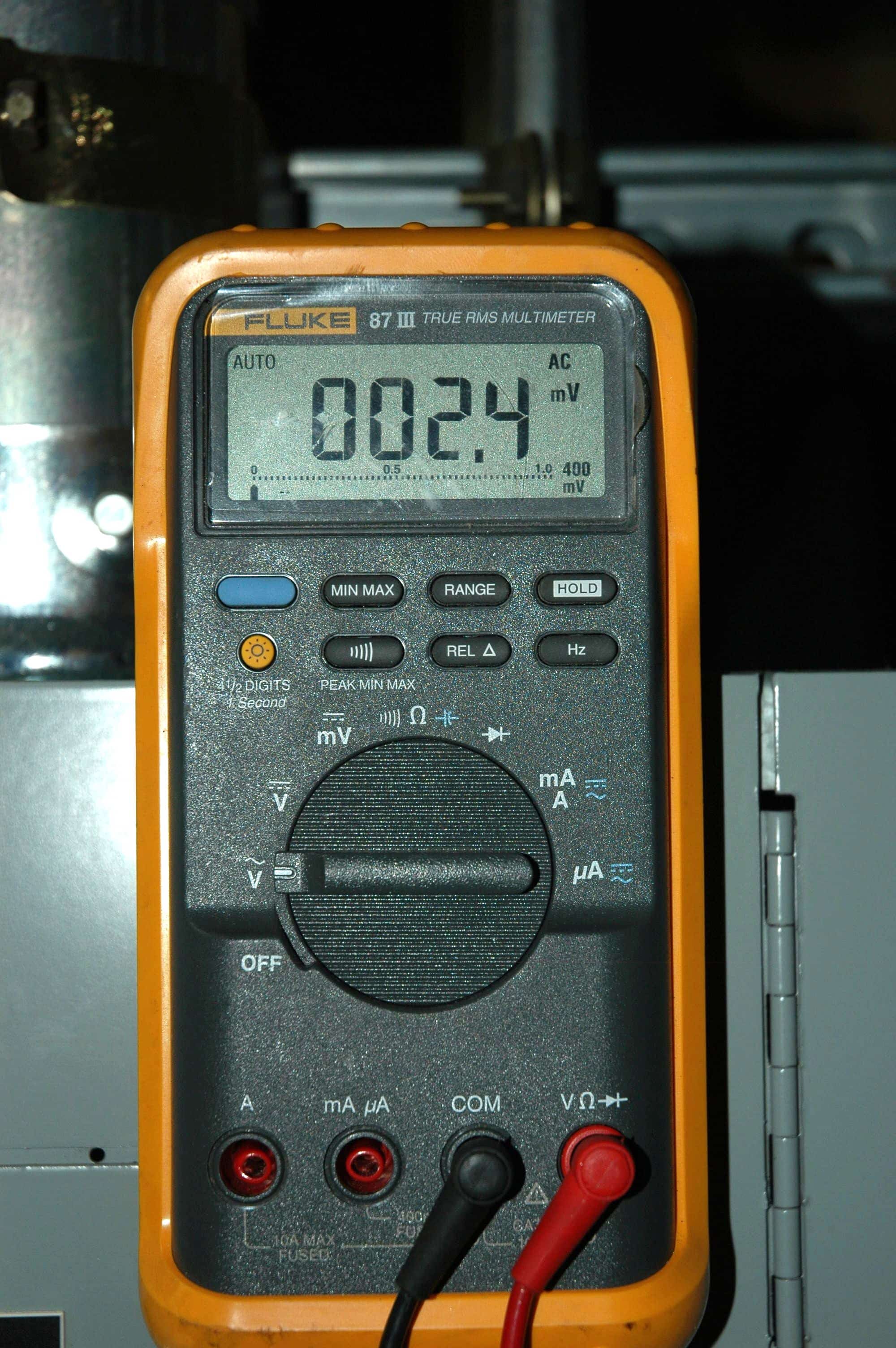
If there’s an irregularity with the switch contact, you can use a simple multimeter to check the contacts of the switch.
- Additional issues will likely require professional attention. If you’ve been experiencing issues with your chiller unit, give us a call at (866) 826-2993.
Replacing Your Chiller Unit
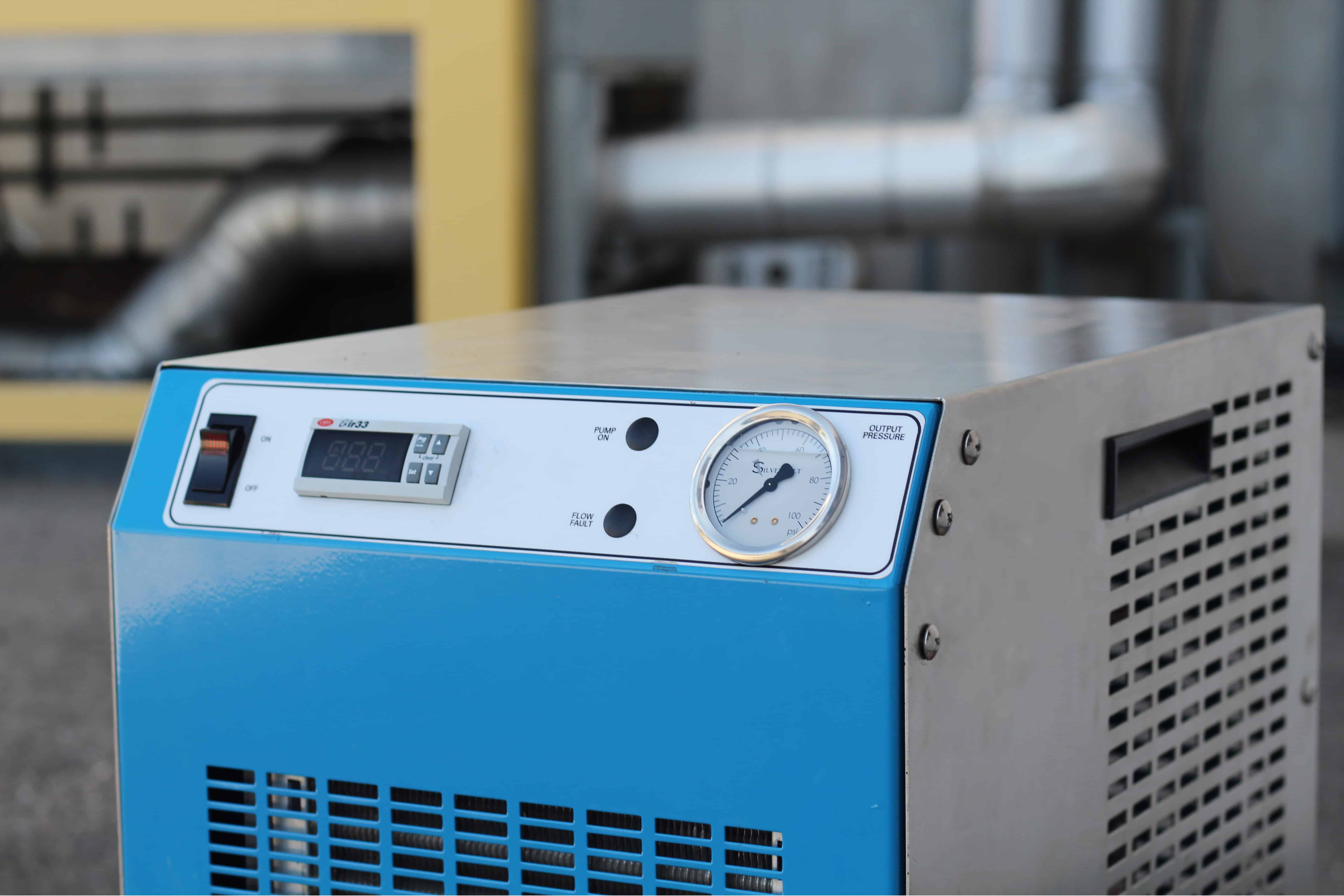
If you’re currently using a chiller unit that you’re unsatisfied with, it may be time to replace it! North Slope Chillers are a top-notch option. If you’d like more information on which North Slope Chiller will best replace your current system, give us a call at (866) 826-2993.
Frequently Asked Questions
How often should an industrial chiller be serviced?+
Industrial chillers should receive basic inspection monthly (fluid levels, pressures, temperatures), quarterly condenser cleaning, semi-annual fluid analysis, and a comprehensive annual service including refrigerant charge check, electrical inspection, and compressor oil analysis.
What are the most common chiller failures?+
The most common failures are dirty condenser coils (causing high head pressure and reduced capacity), low refrigerant charge (from leaks), pump seal failure, clogged strainers or filters, and control sensor drift. Most of these are preventable with routine maintenance.
How do I know when my chiller needs repair vs. replacement?+
Repair is typically worthwhile if the chiller is under 12–15 years old and the repair cost is less than 50% of replacement cost. Consider replacement if the compressor has failed, the refrigerant is being phased out, energy costs have increased significantly, or repairs are becoming frequent.
Ready to solve your cooling challenge?
Our team has helped thousands of businesses find the right chiller solution. Let us help you next.
Keep exploring: Maintenance & Troubleshooting
This article is part of our Maintenance & Troubleshooting resource collection. Browse all the guides in this topic.