
Need help choosing the right system?
Different types of process chillers fall under two main categories: (1) Vapor Absorption and (2) Vapor Compression. Vapor compression chillers are the most common and include (1) air chillers and (2) water/fluid chillers. Chillers are further categorized by the type of compressor technology used: (1) centrifugal, (2) scroll, (3) reciprocating, and (4) screw.
Chiller units are refrigerant systems that aid in cooling residential/commercial spaces, machines, industrial operations, and industrial chemicals. These units are energy efficient, cost-efficient, and time-efficient. Without these systems, production objectives often cannot be achieved.
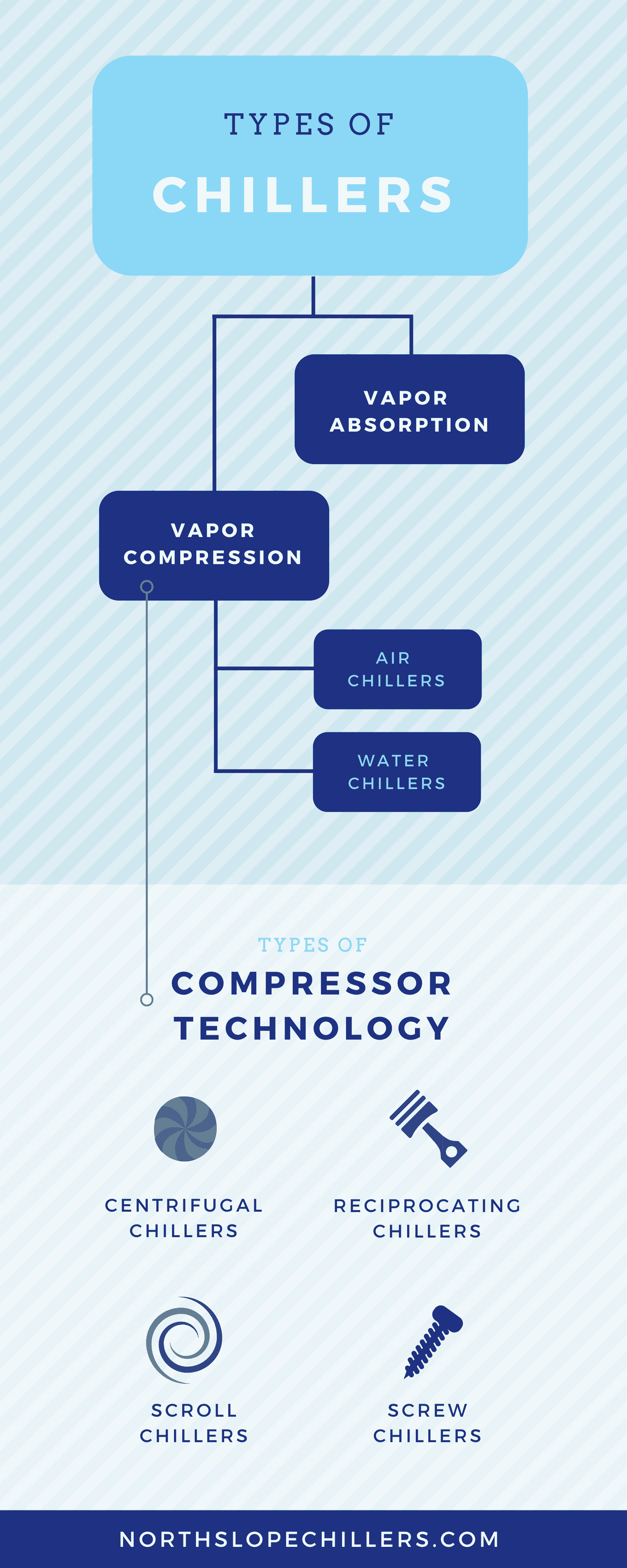
Chillers fall under two main categories: vapor compression and vapor absorption chillers. vapor compression chillers use an electrically driven mechanical compressor to force a refrigerant around the system while vapor absorption chillers use heat to move the refrigerant around the system.
Vapor compression chillers are the most commonly used and fit into two subcategories: air chillers and water chillers. Let’s take a quick look at how each of these work, their applications, and the pros and cons of each.
Not sure which chiller type fits your process?
Our engineers can walk you through the options and recommend the right system for your specific application.
How Air Cooled and Water Chillers Work
Both air and water chillers have the same components: an evaporator, a compressor, a condenser and an expansion valve. Furthermore, the mechanics for both are very similar. The compressor pushes a refrigerant around the inside of the chiller through the condenser, the expansion valve, the evaporator, and back to the compressor.
(Read more about how chillers work here.)
The primary difference between air and water chillers is how the unwanted heat is ejected. Air chillers us air to remove heat while water chillers use, you guessed it, water.
Air Chillers
Air cooled chillers use air to remove heat by using fans to force air across the exposed tubes of the condenser. While air chillers require more energy than water-cooled chillers, they can be a great option when it comes to stationary cooling. Air chillers are easy to instal and typically can be installed outside a building (no extra space requirements). Compared to water chillers, air chillers are more prone to blockages and recirculation issues.
Water Chillers
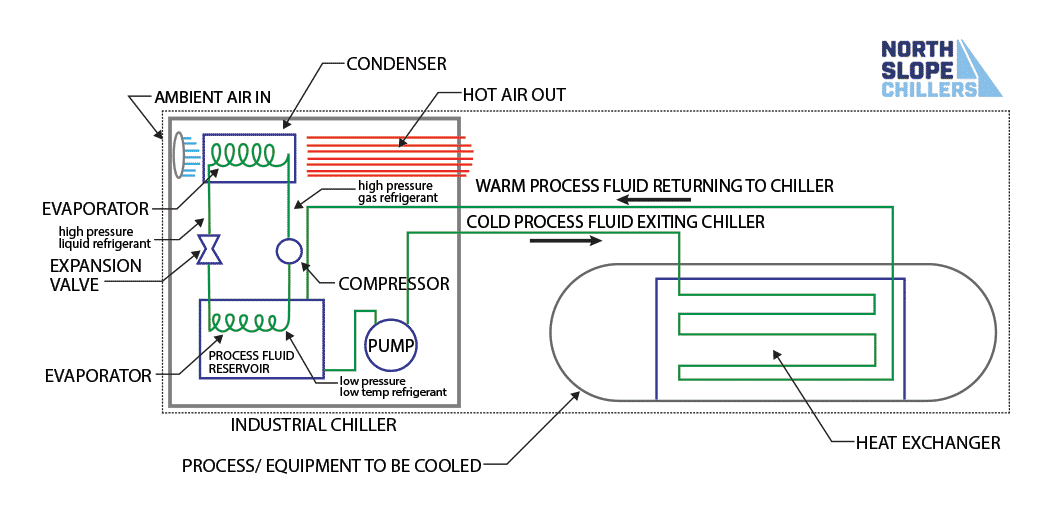
Water chillers remove heat by pumping water through a sealed condenser and dispersing it through the cooling tower. Water-cooled chillers are typically more efficient than air-cooled chillers. Using water evaporation to dissipate heat uses significantly less energy than blowing air across a hot surface. This is thanks to water’s high heat capacity. Additionally, water chillers tend to last longer than air-cooled chillers.
Types of Compressor Technology
Air-Cooling and Water-cooling chillers are further categorized by the type of compressor technology used.
Centrifugal Chillers
The majority of centrifugal chillers are water chillers (It’s extremely rare that you’ll find a centrifugal system in an air chiller). Centrifugal chillers are often used for medium to large cooling loads ( typically available from 150 up to 6,000 tons of refrigeration) This system offers high cooling capacity in a compact design. Centrifugal chillers operate by using rotating impellers to compress the refrigerant and force it around the chiller.
Reciprocating Chillers
These systems work by using a piston and chamber to compress the refrigerant. You’ll find a reciprocating compressor in any of the ½ ton models we sell at North Slope Chillers.
Scroll Compressor Chillers
Scroll compressors are used in both air and water coolers. These chillers operate by using two spiral plates (one stationary and one rotating) to compress the refrigerant. Our chillers use scroll compressors for the 1 and 2-ton models.
Screw Driven Chillers
Screw chillers are also used in both water and air chillers and are best for small to medium cooling loads. These chillers are typically available in 70 to 600 tons. Screw compressors work by using two interlocking rotating helical rotors to compress the refrigerant.
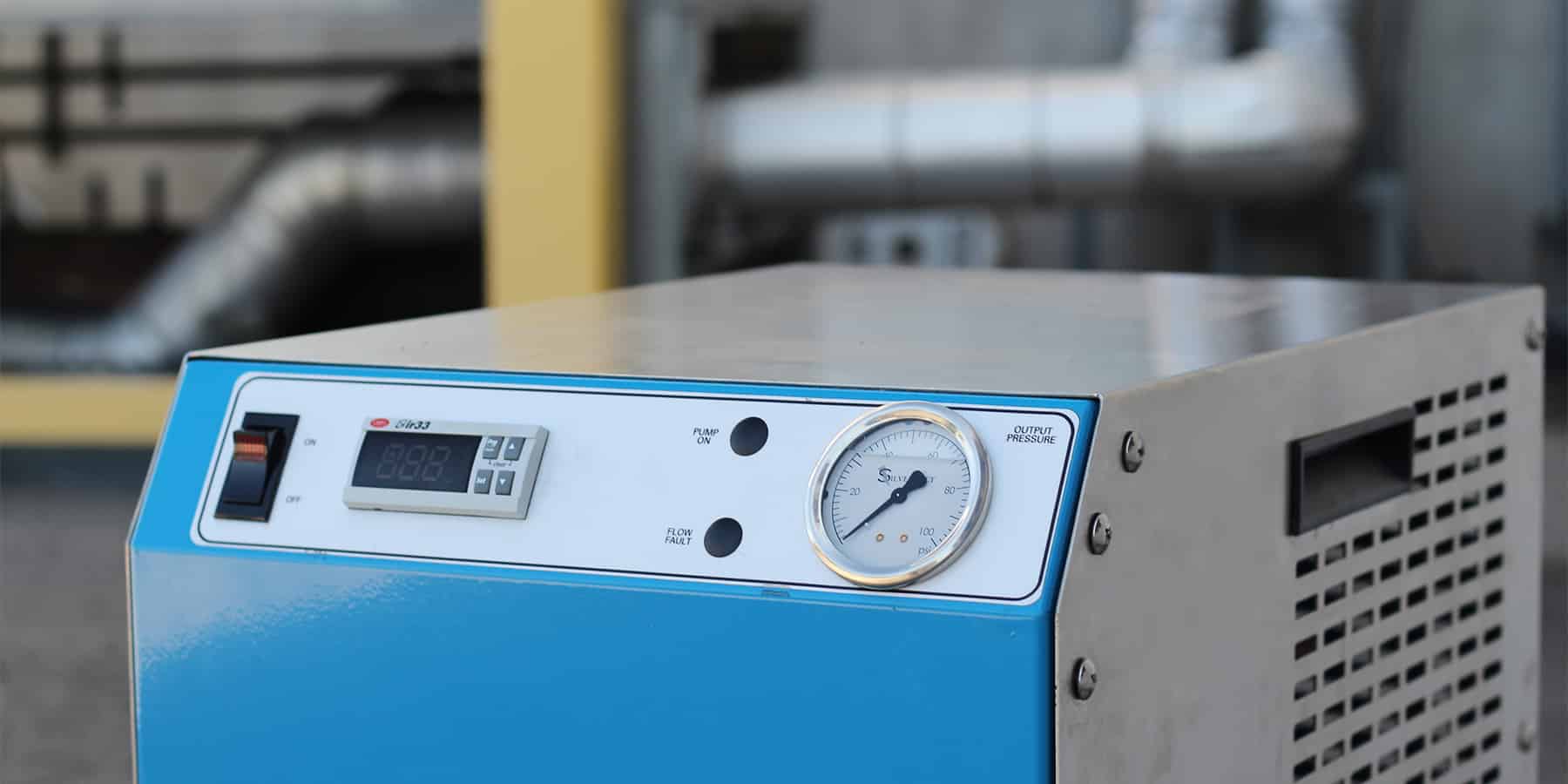
North Slope Chillers are portable water-cooling chillers; they offer all the energy-efficiency and quick cooling of water chillers without intensive installation or bulky towers. If you need help determining which chiller type is best for your needs or would like to learn more about how North Slope Chillers work, shoot us an email at sales@northslopechillers.com.
Frequently Asked Questions
What are the main types of industrial chillers?+
The main types are air-cooled chillers (reject heat to air via fans), water-cooled chillers (reject heat to a water source), and absorption chillers (use heat energy instead of a compressor). Within these categories, compressor types include scroll, reciprocating, screw, and centrifugal.
Which chiller type is best for small to mid-size operations?+
Scroll compressor chillers in the 1/3-ton to 10-ton range are ideal for small to mid-size operations. They are reliable, quiet, energy-efficient at part loads, and available in portable configurations that require no special infrastructure or cooling towers.
What is the lifespan of an industrial chiller?+
A well-maintained industrial chiller typically lasts 15–20 years. Scroll compressor chillers often exceed 20 years with regular maintenance. Key factors affecting lifespan include preventive maintenance, operating conditions, water quality, and whether the chiller is properly sized for the application.
North Slope Chiller Product Lines
Freeze Series
15°F – 75°F
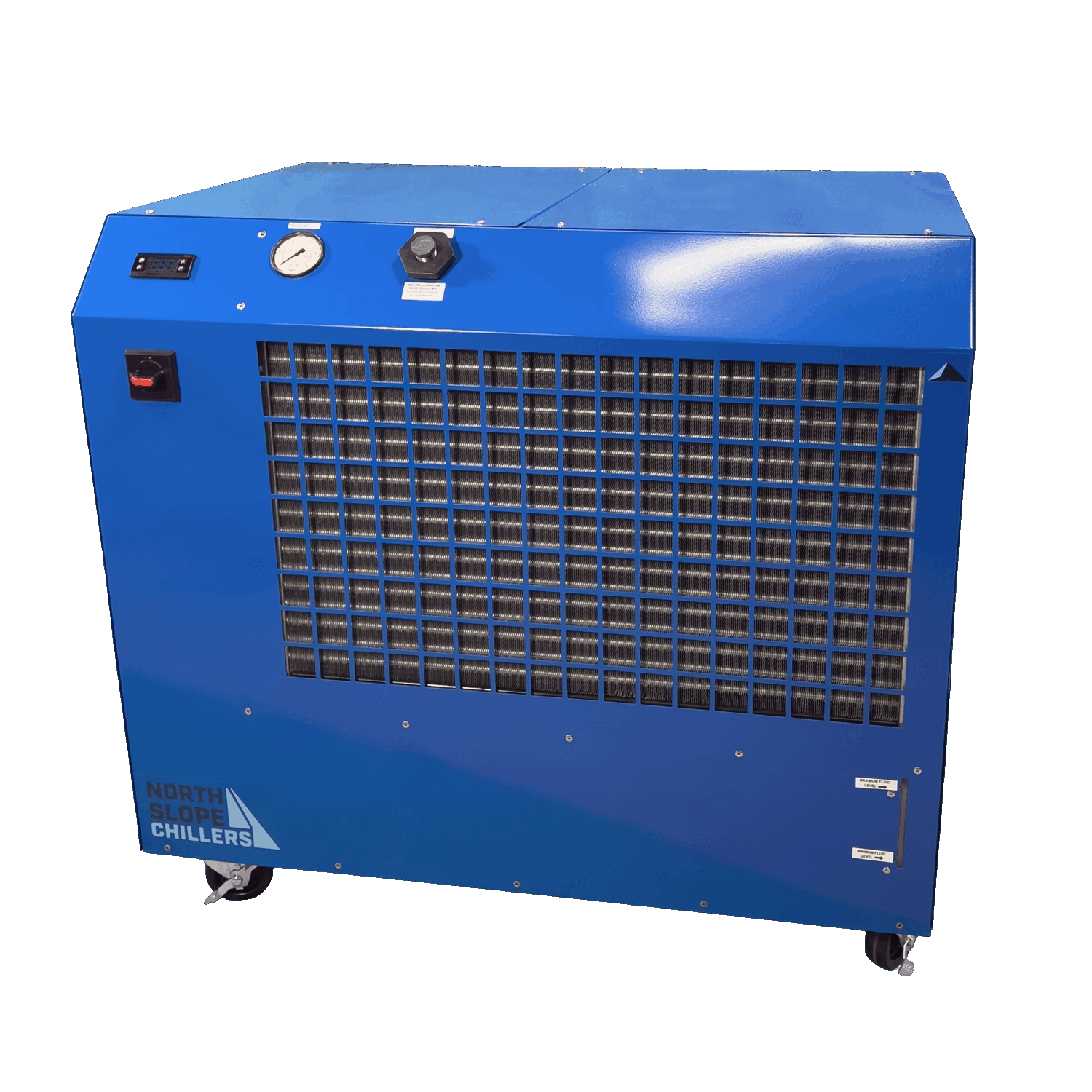
Portable water-cooled chillers with scroll compressors. Available from 1/3 ton to 10 tons for standard process cooling applications.
Learn More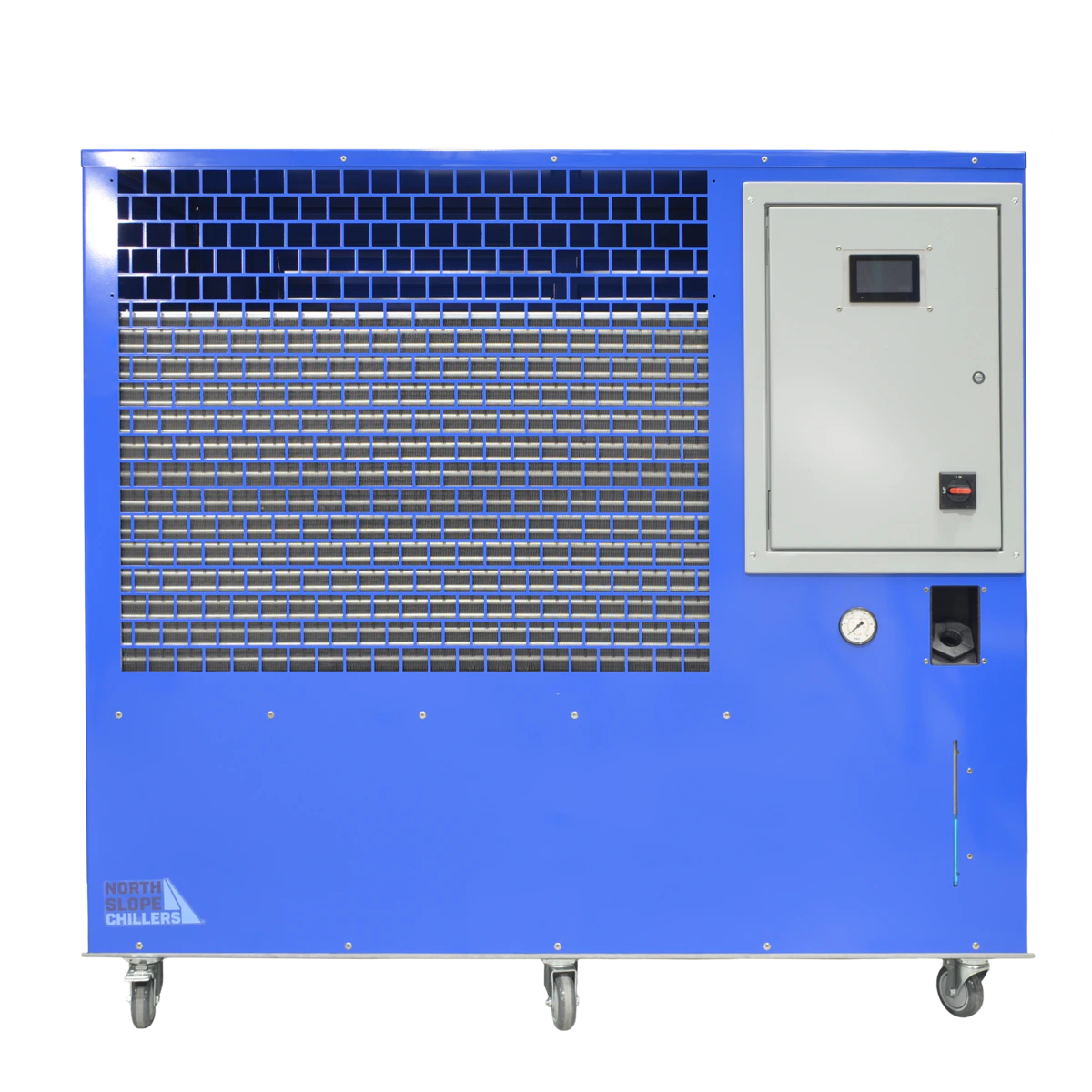
Deep Freeze Series
-20°F – 70°F
Sub-zero capable chillers for applications requiring temperatures well below freezing. Same portable, easy-install design.
Learn More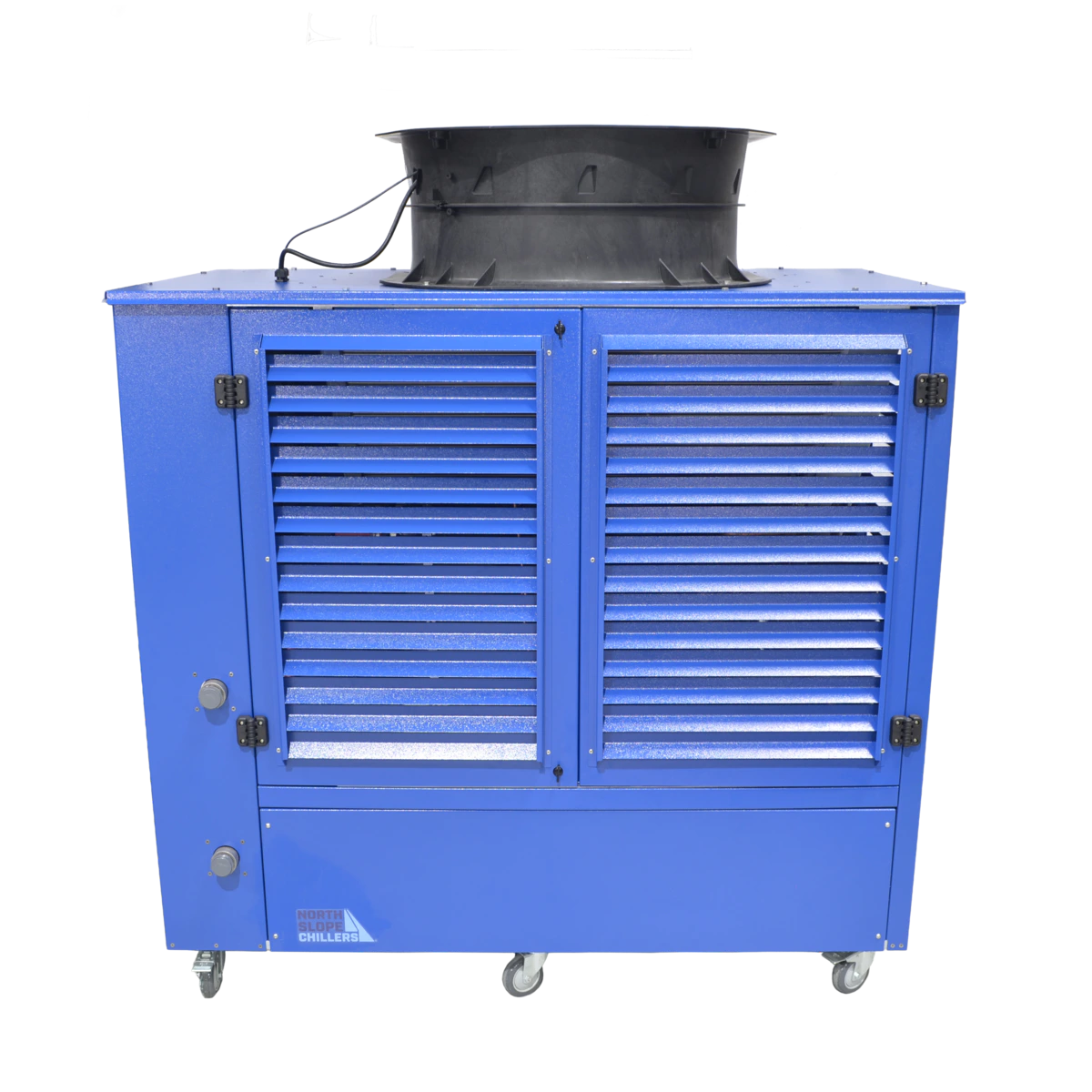
Custom & OEM Systems
Any Range
Engineered-to-order chiller systems built to your exact specifications — any capacity, temperature range, or enclosure requirement.
Learn MoreWhich chiller type is right for your process?
Describe your application — heat load, temperature range, environment — and get an instant recommendation for the right chiller type and size.
Portable Water Chillers In Stock — Ships in 1–2 Days
North Slope Chillers are portable water-cooling chillers that combine the energy efficiency of water-cooled systems with easy installation — no cooling towers or complex plumbing required.
Ready to solve your cooling challenge?
Our team has helped thousands of businesses find the right chiller solution. Let us help you next.
Keep exploring: Chiller Basics
This article is part of our Chiller Basics resource collection. Browse all the guides in this topic.