
Need help choosing the right system?
Son of a…what?
Home brewing has become a very popular practice in recent years. Quick digital access to brewing methodology, online ordering of high quality grains/hops/yeasts, and a growing nationwide appreciation for craft brewing have all fed into a renaissance movement of brewing as an artistic science. With all these ingredients and instructions at our fingertips, finding the right method for you can be a process of trial and error. Let’s examine one of these DIY methods in greater detail…the “son of a fermentation chiller.”
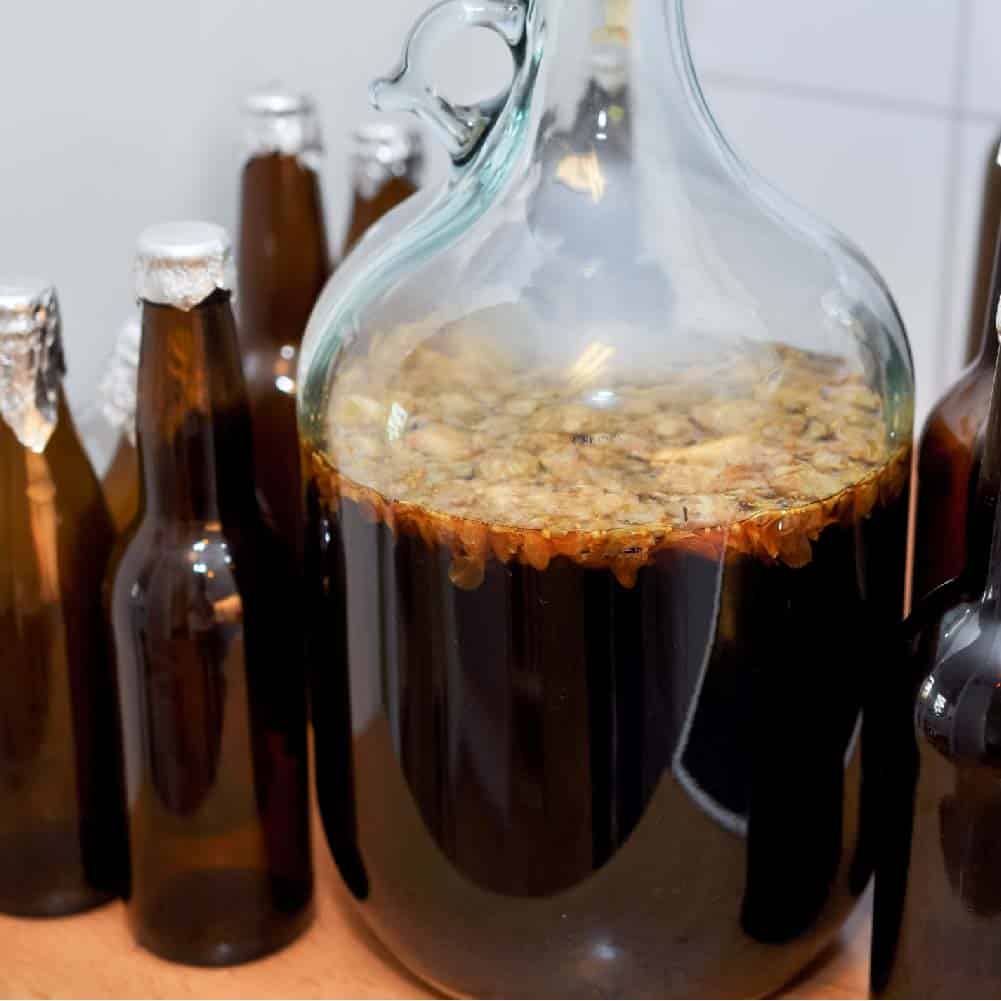
Fermentation Stage
So you have carefully selected your grains, mashed them, malted them, turned them into wort, and cooled your liquid wort so it is ready to be pitched to your yeast. The most crucial part of the brewing process is about to begin…fermentation. The fermentation stage is a tricky one, in that it can ruin all your hard work leading up to this point if your brew’s environment is not carefully protected.
The most important environmental factor in fermentation is temperature. Under the right conditions, yeast will wake up, consume the sugars in your wort, and turn them into alcohol and carbon dioxide. Under the wrong conditions yeast that is too cold will go dormant and not finish fermenting; yeast that is too hot will produce off flavors and aromas or even die off completely.
Running this application in your facility?
We've built custom cooling solutions for this exact use case. Let us design one tailored to your setup.
Enter Fermentation Chambers
Fermentation chambers are specially designed containers to protect the environmental conditions while your brew ferments. They not only protect your brew’s temperature, but reduce exposure to excess oxygen and unwanted pathogens.
There are many different fermentation chambers used by home brewers. They vary widely depending upon batch size, cost, how much brewing space you have, and how much of your time and energy they consume. Since fermentation is an exothermic process, your brew will continuously generate heat as it ferments. So how do you keep your fermentation temperatures in the ideal zone without babysitting your brew around the clock? The solution is a fermentation chiller.
Son of a Fermentation Chiller
Home brewers use many methods to chill their fermentation chambers and one of the more popular DIY methods is to construct a “son of a fermentation chiller.”
First designed by home brewer Ken Schwartz in 1995, the whimsically named son of a fermentation chiller has become a common creation among American home brewers. The plans have been redesigned through the help of feedback from other home brewers, but the basic concept is the same.
This fermentation chiller involves building a chamber made of thick insulation foam boards. The brew is housed inside next to rotating jugs of ice, a fan, and thermometer.
Weighing Pros and Cons

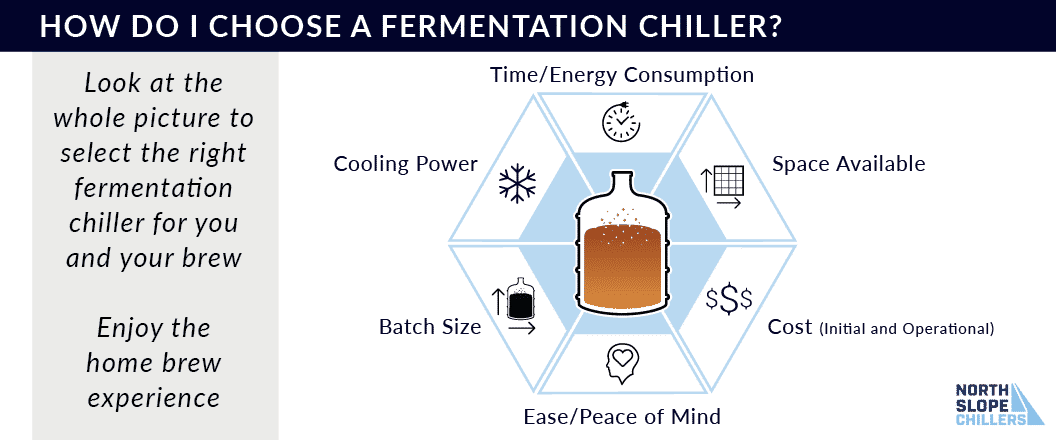
Cost
One of the most appealing aspects of the son of a fermentation chiller is the cost. Low cost materials can be easily purchased and if you possess basic construction skills, it can be easily assembled.
There may be additional costs in the future such as purchase of a second thermometer to make sure you are not just measuring the air temperature inside, but the temperature of your brew itself.
However, cost is only 1 of the factors to consider when looking at your home brew fermentation options.
Batch Size
The larger your brew batch, the more heat will be generated by the fermentation process. The son of a fermentation chiller can be adapted to accommodate up to 7 gallons, but for larger batches, fans and ice will not be sufficient to protect your brew from thermal stress.
Cooling Power
The appeal of buying a small fan to save upfront costs can cause problems in the future. Make sure you have enough cooling power to handle a large, constantly self-heating container of wort.
Time and Energy Consumption
Before home brewing, you need to carefully look at how much time and energy you have available to switch out frozen jugs as they melt and need to be replaced.
Using the son of a fermentation chiller also means spending time carefully monitoring your thermometer.
Space Available
When using a son of a fermentation chiller, the footprint of the chiller may be small, but you will need ample freezer space to store your rotating frozen jugs.
Ease and Peace of Mind
Picture how you would like your home brewing experience to pan out. Balancing work and effort with the enjoyment of sharing your batch with your family and friends is an important aspect of home brewing. Investing in a home brew system can provide long term enjoyment if you carefully weigh your chilling options before hand.
North Slope Chillers Solutions
Be sure to look at the whole picture when embarking upon your home brewing journey. Low cost options seem convenient at first, but can lead to frustrations in the future. Using a reliable fermentation chamber chilling jacket, and fermentation chillers can save you time, energy, and provide more consistent brewing results. North Slope Chillers Fluxwrap jackets and fermentation chillers can transform you from home brew babysitter, to home brew master.
Contact us to find the right fermentation chilling solution for your needs:
(866) 826-2993 sales@northslopechillers.com
Frequently Asked Questions
What is the easiest way to control fermentation temperature for home brewing?+
The easiest method is placing the fermenter in a temperature-controlled space — a chest freezer with a temperature controller is the most popular home brewer solution. For more precise control, a small recirculating chiller with a Fluxwrap jacket provides commercial-grade temperature stability at home scale.
Why does fermentation temperature matter for home brewers?+
Home brewers have less thermal mass (smaller batches) and less insulation than commercial breweries, making their fermenters more susceptible to ambient temperature swings. A 5-gallon carboy in a room that cycles between 65°F and 80°F daily will produce inconsistent, off-flavored beer compared to a temperature-controlled fermentation.
Can I use a modified chest freezer as a fermentation chamber?+
Yes, a chest freezer paired with an external temperature controller (like an Inkbird or Johnson Controls unit) is the most popular and cost-effective fermentation chamber for home brewers. Set the controller to your target fermentation temperature and the freezer cycles on and off to maintain it.
Ready to solve your cooling challenge?
Our team has helped thousands of businesses find the right chiller solution. Let us help you next.
Keep exploring: Applications
This article is part of our Applications resource collection. Browse all the guides in this topic.