
Need help choosing the right system?
If your business or organization regularly works with, stores, or manufactures chemical products, you’re likely familiar with chemical hazards and proper safety protocol (We’re willing to bet you’ve been through one or two chemical safety courses as part of your training).
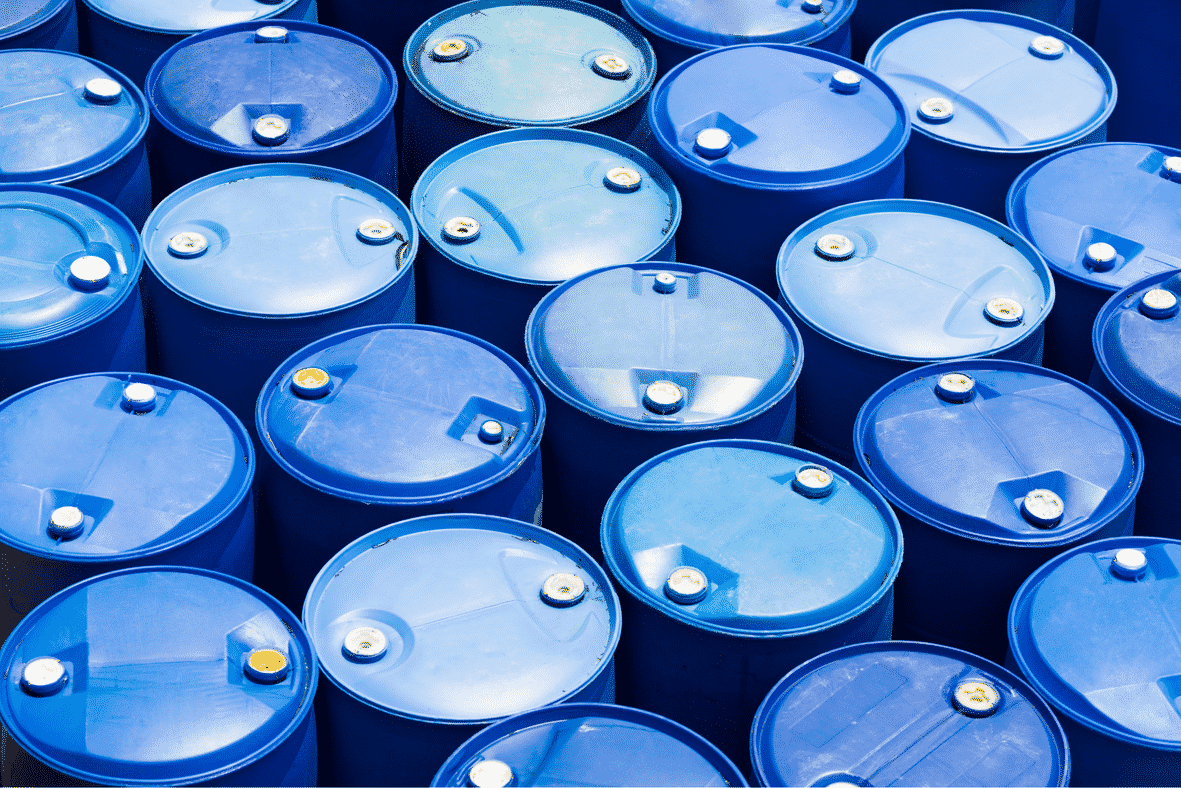
For those who aren’t as familiar with chemical handling and cooling, it’s important to remember that an important part of safe chemical use is safe storage, Generally, storing hazardous chemicals requires sorting by oxidation (chemical reaction), flammability, toxicity, explosive properties, etc., away from outdoor exposure, and, if applicable, out of reach of children. Safety guidelines also require the use of clear warning labels.
Not only does improper chemical storage pose a serious safety risk, it can also lead to some expensive material loss. There are certain chemicals (like industrial chemicals) that degrade or oxidize in warm environments over time. In such cases, it’s important to make sure storage containers are kept the proper temperatures. Fortunately, there are a few different options for keeping both large and small scale chemical storage cool.
REFRIGERATED ROOMS
Refrigerated rooms are exactly what they sound like; they are essentially room-sized refrigerators. These could be a good process cooling solution for large production facilities that need more space to accommodate a constant storage supply of chemical drum containers.
However, refrigerated rooms have a few limitations:
- Requires significant time to set up
- Costly to design and construct
- Not practical to operate when chemicals are in use at several points in the facility
- Difficult to scale up when more storage space is needed
- Difficult to relocate once it’s set-up
CHILLER UNITS
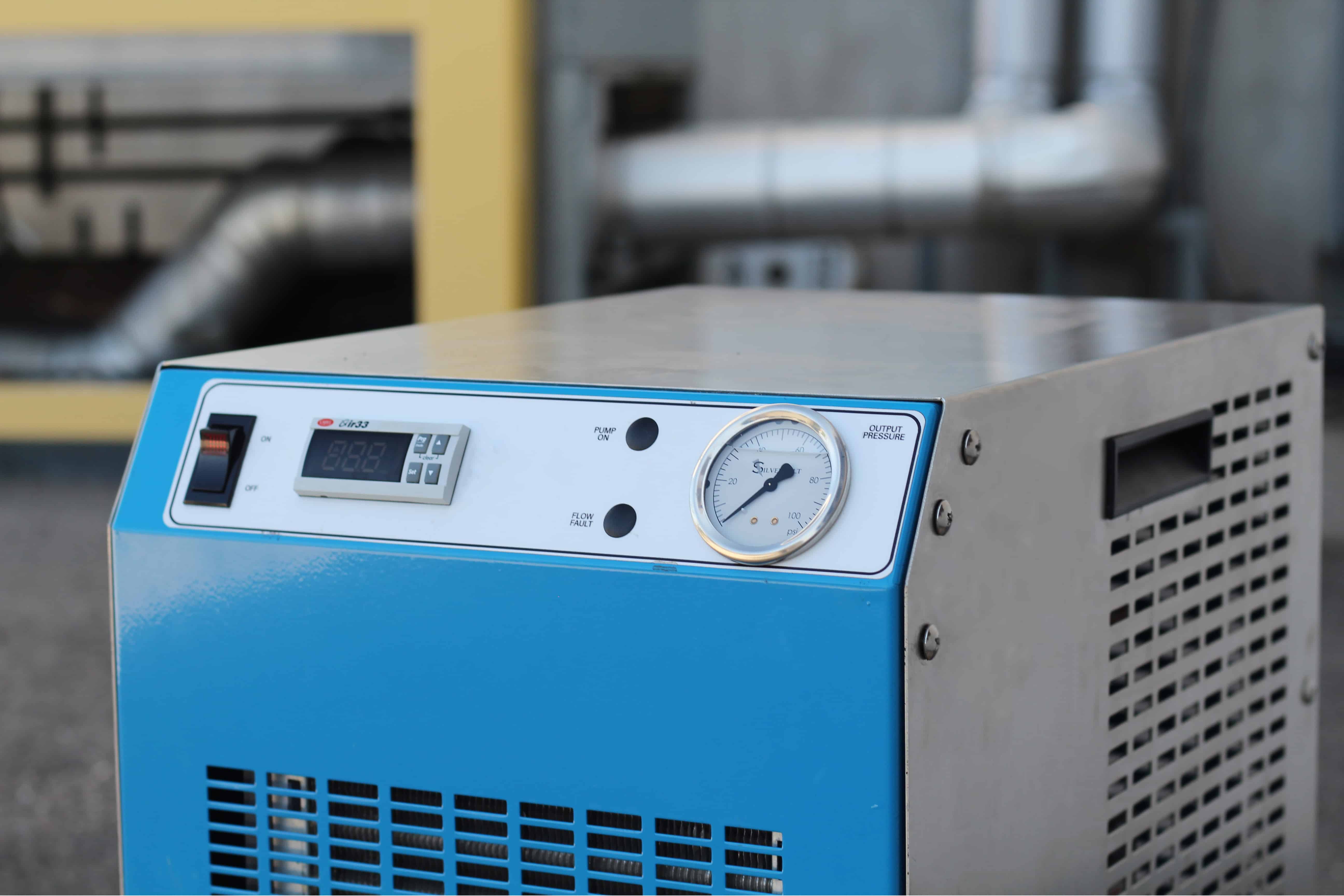
A second option for cooling during storage are chiller units. Chemical chillers work by using localized cooling to draw excess heat from the contents of each drum container. Chillers require a separate heat exchanger to “connect” the chiller to the drum.
Running this application in your facility?
We've built custom cooling solutions for this exact use case. Let us design one tailored to your setup.
We’ll discuss the following two heat exchangers: the submersible coil unit, and the fluid cooling blanket.
SUBMERSIBLE COIL UNIT
This unit is connected to a chiller and submerged directly into the chemical drum. Coils are most commonly composed of plastic and metal. While these units provide more flexibility, portability, and scalability than a refrigerated room, some drawbacks include:
- Exposure to dangerous chemicals
- Contamination of the chemical substances from the coil unit and air-transported fragments
- Evaporation of drum contents
- Potential localized freezing/ uneven cooling
FLUID COOLING BLANKET
This heat exchanger is connected to a chiller and wrapped around the storage drum. Fluid runs through the blanket and pulls heat from the drum. We’ve found that this solution is generally most effective for the following reasons:
- Hazardous chemicals are fully contained
- Less possibility of product contamination
- Better insulation for the drum products
- Provides even, consistent cooling (No localized freezing)
- Easy to install and scale up or down
- Can be used throughout a facility
If you are trying to decide which cooling solution is best for you and your needs, we’d love to answer any of your questions! Shoot us an email at sales@northslopechillers.com.
Frequently Asked Questions
Why is temperature control critical for chemical storage?+
Many chemicals are temperature-sensitive — excess heat can trigger decomposition, accelerate degradation, increase vapor pressure and off-gassing, or cause dangerous exothermic runaway reactions. Maintaining proper storage temperatures preserves chemical purity, extends shelf life, and ensures safety.
What cooling methods are used for chemical storage tanks?+
Common methods include tank cooling jackets, Fluxwrap wraps for drums and smaller tanks, immersion coils for open tanks, and climate-controlled storage rooms. The choice depends on tank size, chemical compatibility, temperature requirements, and whether the chemical can contact the cooling element directly.
What coolant is safe to use around chemicals?+
Propylene glycol is the safest choice for cooling near chemicals because an accidental leak would not introduce a toxic substance into the area. For secondary containment systems, water is acceptable. The cooling system materials must also be chemically compatible — stainless steel or PTFE for corrosive chemicals.
Ready to solve your cooling challenge?
Our team has helped thousands of businesses find the right chiller solution. Let us help you next.
Keep exploring: Applications
This article is part of our Applications resource collection. Browse all the guides in this topic.