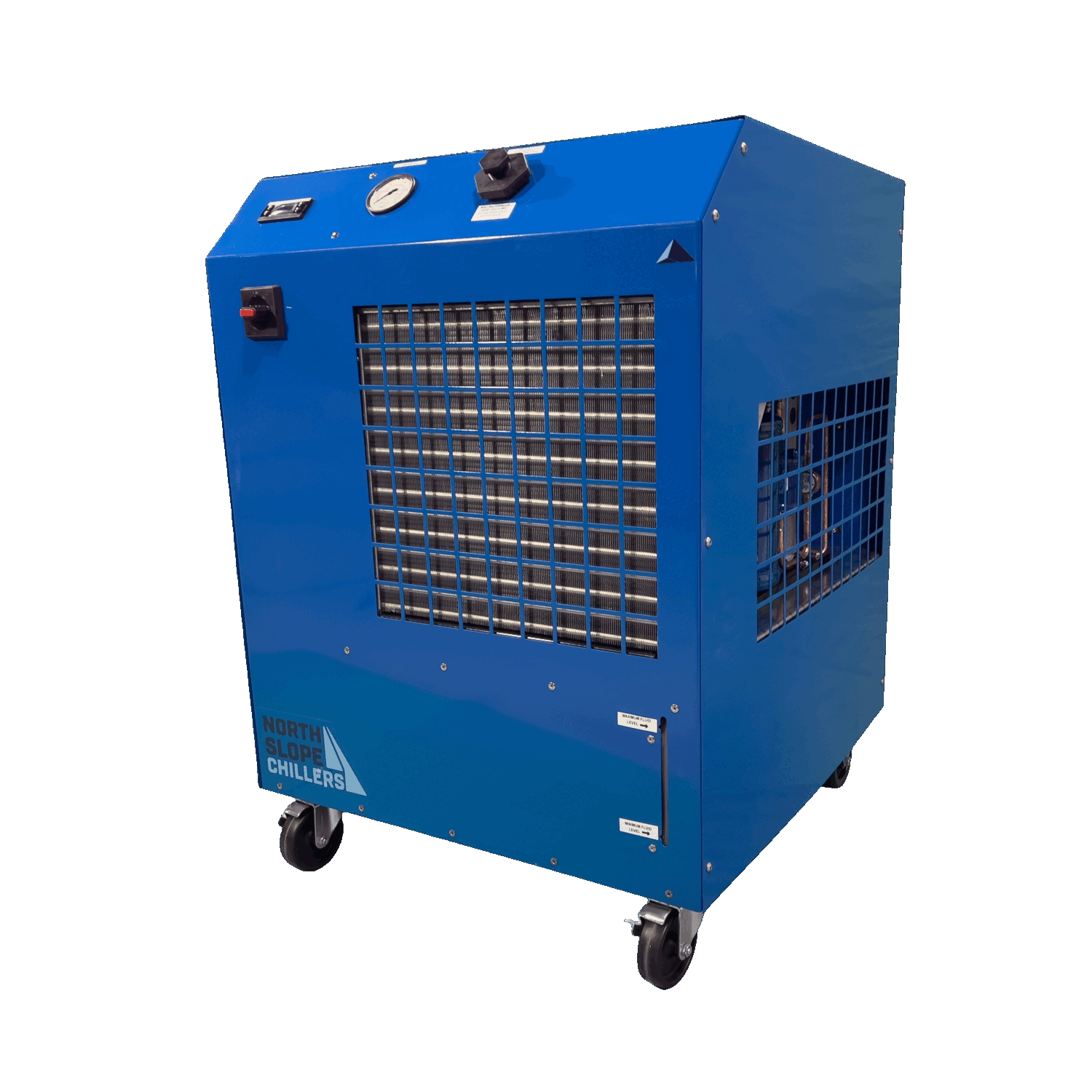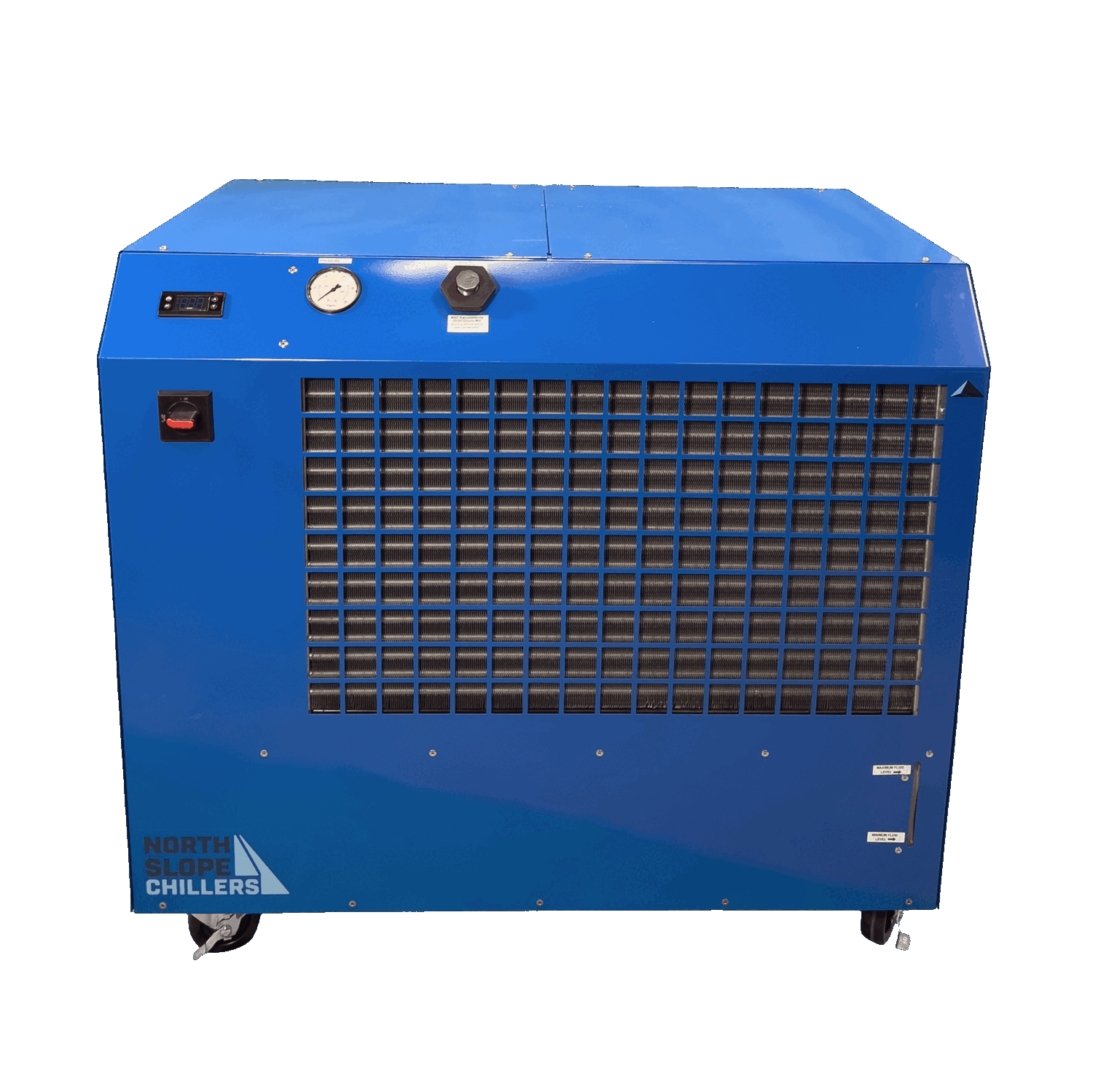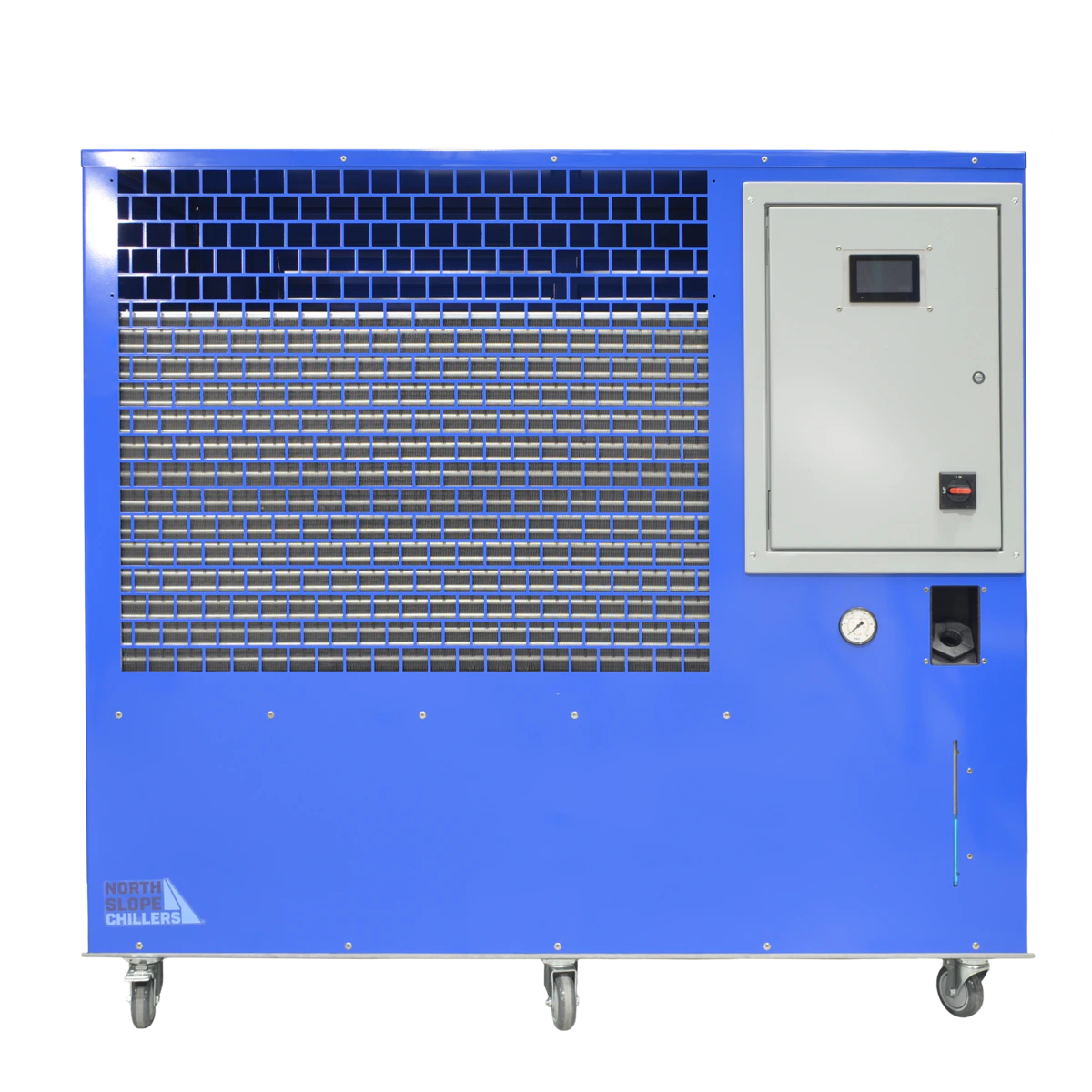
Need help choosing the right system?
The Complete Industrial Chiller Buyer's Guide
If you're shopping for an industrial chiller for the first time — or replacing one that's seen better days — there's a lot to sort through. Chiller types, cooling capacities, refrigerant options, portable vs. stationary, air-cooled vs. water-cooled... it adds up fast.
This guide cuts through the noise. We'll walk you through everything you need to know to choose the right chiller for your process, your facility, and your budget — no engineering degree required.
Find Your Chiller in 30 Seconds
Answer three quick questions and we'll point you to the right product.
What temperature do you need?
What Does an Industrial Chiller Actually Do?
At its core, a chiller removes heat from a liquid (usually water or a water-glycol mix) and sends that cooled liquid to your process. The process absorbs heat, the warm fluid returns to the chiller, and the cycle repeats.
That's it. Whether you're cooling an injection mold, a fermentation tank, a laser cutter, or a CNC spindle — the job is the same: keep your process at the right temperature, consistently.
The difference between a good chiller and a bad one comes down to how reliably, efficiently, and precisely it does that job.
Step 1: Figure Out Your Heat Load
Before you look at a single chiller spec sheet, you need to answer one question: how much heat do I need to remove?
This is your heat load, measured in BTU/hr (British Thermal Units per hour) or tons of cooling. Here's the basic formula:
BTU/hr = Flow Rate (GPM) × Temperature Rise (°F) × 500
Or if you're starting from scratch and just know your tank volume:
BTU = Gallons × 8.33 × Temperature Change (°F)
Divide that by the number of hours you need the cool-down to happen, and you have your BTU/hr requirement. Divide BTU/hr by 12,000 to convert to tons.
Example: You need to cool 200 gallons of water from 80°F to 50°F in 2 hours.
- BTU = 200 × 8.33 × 30 = 49,980 BTU
- BTU/hr = 49,980 ÷ 2 = 24,990 BTU/hr
- Tons = 24,990 ÷ 12,000 ≈ 2.1 tons
So you'd need roughly a 2-ton chiller. In practice, you should add a 20–25% safety margin to account for ambient heat gain, pump heat, and real-world losses — so a 2.5 to 3-ton unit would be the right call.
Don't want to do the math yourself? Our AI tool can walk you through it.
Step 2: Decide on Cooling Type
Air-Cooled Chillers
Air-cooled chillers reject heat to the surrounding air using fans and condenser coils. They're the simplest to install — plug in, connect your process lines, and go.
Best for:
- Facilities without a water source for condenser cooling
- Outdoor installations or well-ventilated spaces
- Applications where simplicity matters more than peak efficiency
Watch out for: Performance drops in hot ambient conditions (above 95°F). The hotter the air, the harder the chiller has to work.
Water-Cooled Chillers
Water-cooled chillers reject heat to a water source instead of air. They're more efficient — water transfers heat about 20 times better than air — but traditionally require a cooling tower and more complex plumbing.
Best for:
- Applications where energy efficiency is a priority
- Hot environments where air-cooled units struggle
- Facilities with access to a water supply
A note about portable water-cooled chillers: North Slope Chillers' Freeze and Deep Freeze series are water-cooled but designed for simple installation — they connect to a standard facility water line or hose, with no cooling tower required. You get the efficiency of water-cooled performance with the simplicity of a portable unit.
Step 3: Know Your Temperature Range
Not all chillers can reach the same temperatures.
Standard Process Chillers (40°F to 70°F)
This covers the vast majority of industrial cooling applications: injection molding, CNC machining, printing, welding, general process water cooling. If your process runs at or above room temperature and you just need to keep it stable, a standard chiller is your answer.
Low-Temperature Chillers (-20°F to 40°F)
If your process needs sub-freezing fluid — think cannabis extraction, freeze drying, pharmaceutical cold chain, or low-temperature materials testing — you need a chiller specifically designed for that range. Standard units can't get there.
How to decide: If your target process temperature is above 40°F, a standard chiller works. Below 40°F, you need a low-temp unit. Simple as that.
Step 4: Portable or Stationary?
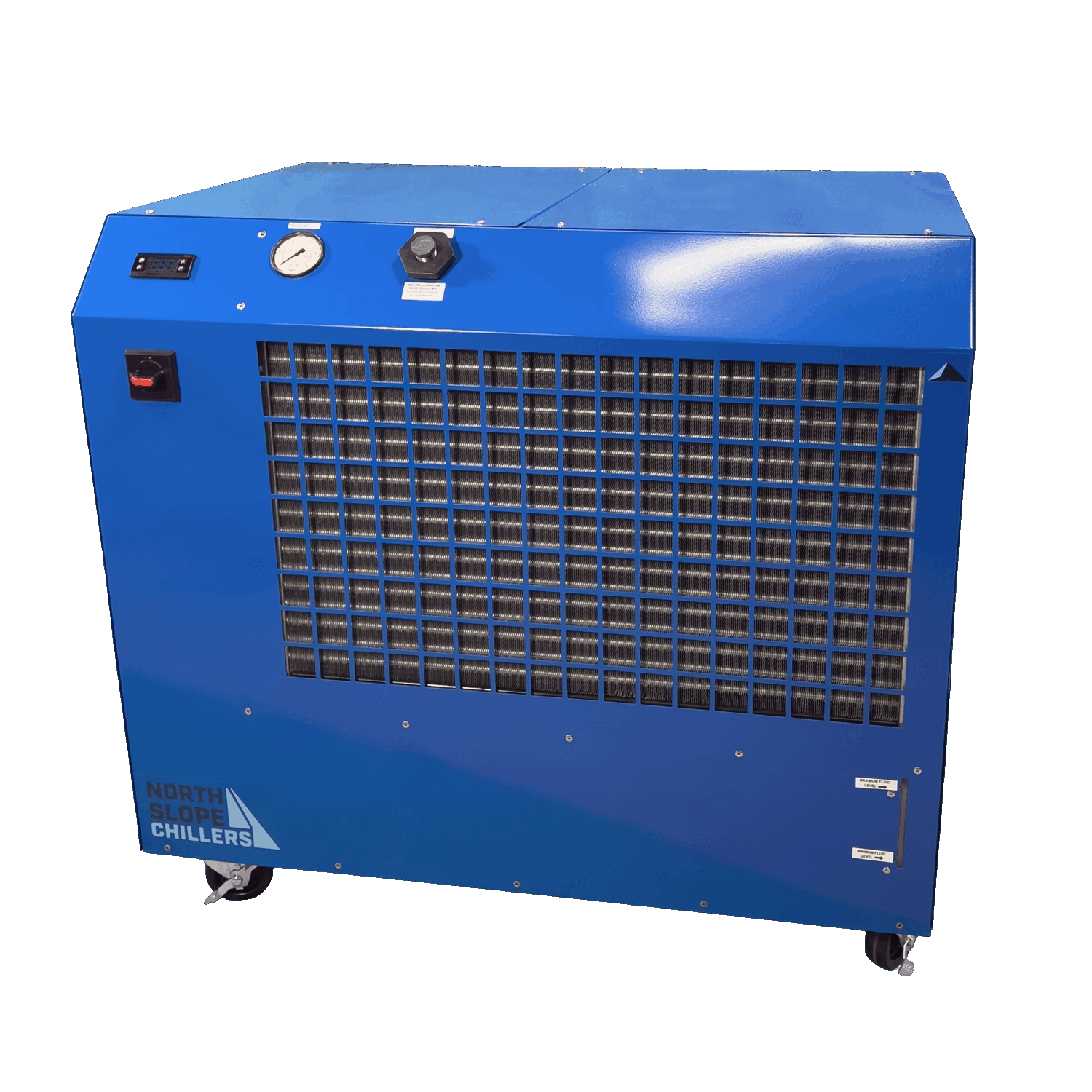
Portable Chillers (1/3 Ton to 10 Tons)
Portable chillers sit right next to your process. They have wheels (or can be easily moved with a forklift), built-in pumps and reservoirs, and require minimal installation — usually just power and water connections.
Best for:
- Single machines or processes
- Facilities that need flexibility (move the chiller between jobs or locations)
- First-time buyers who want something straightforward
- Operations under about 10 tons of cooling
This is where most buyers land, and for good reason. A portable chiller gives you dedicated, independent temperature control for your process without redesigning your facility.
Central Plant Chillers (10+ Tons)
Central plant systems use a large chiller (or multiple chillers) to supply chilled water to multiple processes through a piped distribution system.
Best for:
- Large facilities with 10+ machines or processes all needing cooling
- Operations over 10–15 tons total cooling load
- Facilities where a central chilled water loop already exists
The trade-off: higher upfront cost, more complex installation, and if the central chiller goes down, everything goes down. Many facilities use a combination — central plant for baseload and portable units for dedicated or backup cooling.
Not sure which chiller type fits your process?
Our engineers can walk you through the options and recommend the right system for your specific application.
Step 5: Consider Your Coolant
Plain water is the most efficient coolant and works great for applications above 40°F in heated facilities where freezing isn't a risk.
Water-glycol mix is needed when:
- Your chiller operates below 40°F (to prevent freezing)
- The chiller or piping runs through unheated spaces
- You need freeze protection for seasonal or overnight shutdowns
Propylene glycol is the standard choice — it's non-toxic and food-safe. Ethylene glycol transfers heat slightly better but is toxic, so it's only appropriate for closed industrial systems with no food or product contact risk.
Deionized (DI) water is required for laser cooling, semiconductor equipment, and other applications where mineral deposits would damage sensitive components. If you go this route, make sure your chiller has DI-compatible materials (stainless steel wetted parts).
Use only as much glycol as your temperature requires — every 10% increase in glycol concentration reduces cooling efficiency by about 3–5%.
Step 6: Match the Specs That Matter
Beyond cooling capacity, here are the specifications that actually affect your day-to-day experience:
Temperature stability (±°F): How tightly the chiller holds setpoint. Most process applications need ±1°F. Precision applications (lasers, semiconductors) may need ±0.5°F.
Flow rate (GPM): The chiller's pump must deliver enough flow for your process. Check your equipment manufacturer's minimum flow requirements.
Pump pressure (PSI): Longer pipe runs and higher elevations need more pump pressure. If the chiller is 50+ feet from your process, verify the pump can handle the head loss.
Electrical requirements: Verify voltage, phase, and amperage match your facility. Smaller chillers (under 3 tons) typically run on single-phase 208/230V. Larger units may need three-phase power.
Indoor vs. outdoor rating: If the chiller will live outside, it needs a weather-rated enclosure, corrosion-resistant components, and proper drainage.
Noise level (dBA): Matters if the chiller will be near work areas. Scroll compressors are significantly quieter than reciprocating compressors.
Tap any spec below for more detail on what it means for your application:
Step 7: Think About Total Cost of Ownership
The purchase price is just the beginning. Here's what the real cost looks like over a chiller's 15–20 year lifespan:
| Cost Category | Typical Range |
|---|---|
| Purchase price | $3,000 – $25,000 (portable, 1/3 to 10 ton) |
| Electricity | $500 – $3,000/year depending on size and run time |
| Glycol | $100 – $300 every 3–5 years |
| Preventive maintenance | $200 – $500/year |
| Condenser water | Varies by local rates |
The biggest ongoing cost is electricity. A chiller that's 10% more efficient saves you hundreds per year over its lifetime. Don't just compare purchase prices — compare energy consumption at your operating conditions.
Use the calculator below to estimate your total cost based on your actual usage:
Total Cost of Ownership Calculator
Estimate what a chiller will actually cost over 5 years.
Purchase
~$5,500
Electricity/yr
$576
Maintenance/yr
$300
5-Year Total
$10,280
Estimates based on approximate power consumption of 2.4 kW and typical maintenance costs. Actual costs vary by model, usage, and local rates.
Buying vs. renting: For permanent needs, buying is almost always cheaper over time. Rental makes sense for seasonal peaks, temporary projects, emergency backup, or trial runs before committing to a purchase.
Common Mistakes to Avoid
-
Undersizing the chiller. The most common mistake. An undersized chiller runs 100% of the time, never reaches setpoint, wears out faster, and costs more in electricity. Always add a 20–25% safety margin to your calculated heat load.
-
Ignoring ambient conditions. A chiller rated at 2 tons at 75°F ambient may only deliver 1.5 tons at 95°F. If you're in a hot climate or an enclosed space, factor that in.
-
Forgetting about glycol's effect on capacity. A 50% glycol mixture reduces cooling capacity by about 15–20% compared to pure water. If you need glycol, size the chiller for the reduced capacity — not the nameplate rating.
-
Skipping preventive maintenance. A dirty condenser alone can reduce chiller capacity by 20–30%. Monthly visual checks, quarterly coil cleaning, and annual fluid analysis keep your chiller running at full capacity for decades.
-
Over-specifying the chiller. Buying a 10-ton unit for a 2-ton job wastes money upfront and energy ongoing (short-cycling is hard on compressors). Right-sizing matters in both directions.
When to Call an Engineer
Sizing a chiller for a single, straightforward application is something most people can handle with the formula above. But there are situations where talking to an engineer saves you time and money:
- Your process has a variable or intermittent heat load
- You need to cool multiple processes from one chiller
- Your application involves hazardous materials, cleanroom requirements, or regulatory compliance
- You're designing a new cooling system from scratch
- You're not sure about your heat load and don't want to guess
North Slope Chillers' engineering team does this every day. Call us at (866) 826-2993 or request a quote — we'll help you figure out exactly what you need.
Quick Decision Framework
| If you need... | Consider... |
|---|---|
| Simple, reliable cooling for one machine | Portable chiller, sized 20% above your heat load |
| Sub-zero temperatures (-20°F and below) | Deep Freeze series low-temperature chiller |
| Cooling for drums, tanks, or vessels without jackets | Fluxwrap cooling wrap + portable chiller |
| Cooling for 5+ machines on one floor | Central chilled water loop or multiple portable units |
| Emergency or temporary cooling | Chiller rental |
| A specialized or unusual application | Talk to an engineer — custom solutions exist |
Frequently Asked Questions
How long does an industrial chiller last?+
A well-maintained industrial chiller typically lasts 15–20 years. Scroll compressor units often exceed 20 years. The biggest factor is consistent preventive maintenance — monthly visual checks, quarterly coil cleaning, and annual fluid analysis.
How quickly can I get a chiller?+
In-stock portable chillers from North Slope Chillers ship within 1–2 business days. Custom or OEM systems typically take 4–8 weeks depending on complexity.
Do I need a plumber or electrician to install a portable chiller?+
Most portable chillers require only a dedicated electrical circuit and process water connections. Many facilities handle installation in-house. Larger units or custom plumbing runs may benefit from professional installation.
What is the difference between air-cooled and water-cooled chillers?+
Air-cooled chillers reject heat through fans blowing air over condenser coils — they need no cooling tower or external water supply. Water-cooled chillers use a cooling tower and condenser water loop, offering higher efficiency in large or high-ambient environments but requiring more infrastructure.
How do I calculate what size chiller I need?+
Use the formula: BTU/hr = GPM × 500 × ΔT, where GPM is your flow rate and ΔT is the temperature difference between inlet and outlet. Divide BTU/hr by 12,000 to convert to tons. Add a 20% safety margin for real-world conditions.
Can I use a chiller outdoors?+
Yes, but the chiller must have a weather-rated enclosure, corrosion-resistant components, and proper drainage. Not all portable chillers are rated for outdoor use — check the manufacturer's specifications before placing a unit outside.
What maintenance does an industrial chiller require?+
Key maintenance tasks include monthly visual inspections, quarterly condenser coil cleaning, semi-annual fluid analysis, annual compressor checks, and glycol replacement every 3–5 years. A preventive maintenance schedule extends chiller life and maintains efficiency.
Ready to solve your cooling challenge?
Our team has helped thousands of businesses find the right chiller solution. Let us help you next.
Keep exploring: Chiller Basics
This article is part of our Chiller Basics resource collection. Browse all the guides in this topic.