
Need help choosing the right system?
Not sure which chiller type fits your process?
Our engineers can walk you through the options and recommend the right system for your specific application.
What’s in a name?
Think you’ve never heard of a recirculating chiller before? Think again.
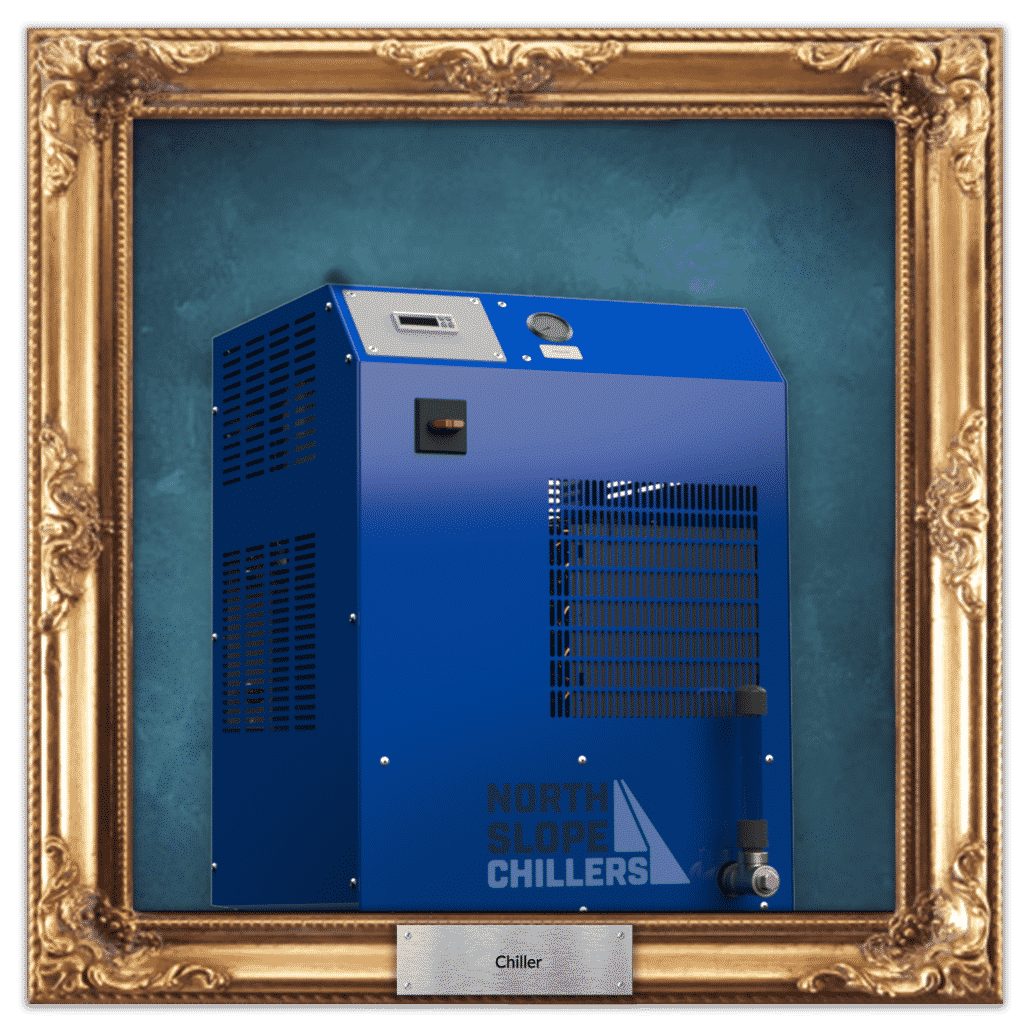
Chiller: You Know What It Is
When we think of industrial cooling equipment, the word that most often comes to mind is “chiller.” That’s because chiller is the term most often used in any industry when referring to cooling equipment.
Known By Another Name
Technically, these units are called recirculating chillers, aptly named for their ability to circulate liquids through a cooling system while drawing heat away from temperature-sensitive materials. Recirculating chillers come in a variety of shapes and sizes, suiting the specific industries they serve. From hydroponics to plastics, cannabis to dairy, and lasers to 3D printing, recirculating chillers are an important part of manufacturing everywhere.
Did you know that chillers originated in German breweries? Check out our article on how to keep beer cold to learn about how and why recirculating chillers came into existence.
Frequently Asked Questions
What is a recirculating chiller?+
A recirculating chiller is a self-contained cooling unit with a built-in pump that continuously circulates temperature-controlled fluid through external equipment and back to the chiller. It is a closed-loop system that provides precise, consistent cooling without wasting water or requiring external plumbing infrastructure.
What are recirculating chillers used for?+
Recirculating chillers cool laboratory instruments, analytical equipment, laser systems, CNC spindles, vacuum pumps, rotary evaporators, medical devices, and small-scale industrial processes. They are the standard cooling solution for any application needing precise, dedicated temperature control in a compact package.
How do I choose between a recirculating chiller and a once-through water system?+
Choose a recirculating chiller when you need precise temperature control (±1°F), want to reduce water usage, need coolant temperatures below your tap water temperature, or require glycol for freeze protection. Once-through water is simpler but wastes water, provides no temperature control, and varies seasonally.
Ready to solve your cooling challenge?
Our team has helped thousands of businesses find the right chiller solution. Let us help you next.
Keep exploring: Chiller Basics
This article is part of our Chiller Basics resource collection. Browse all the guides in this topic.