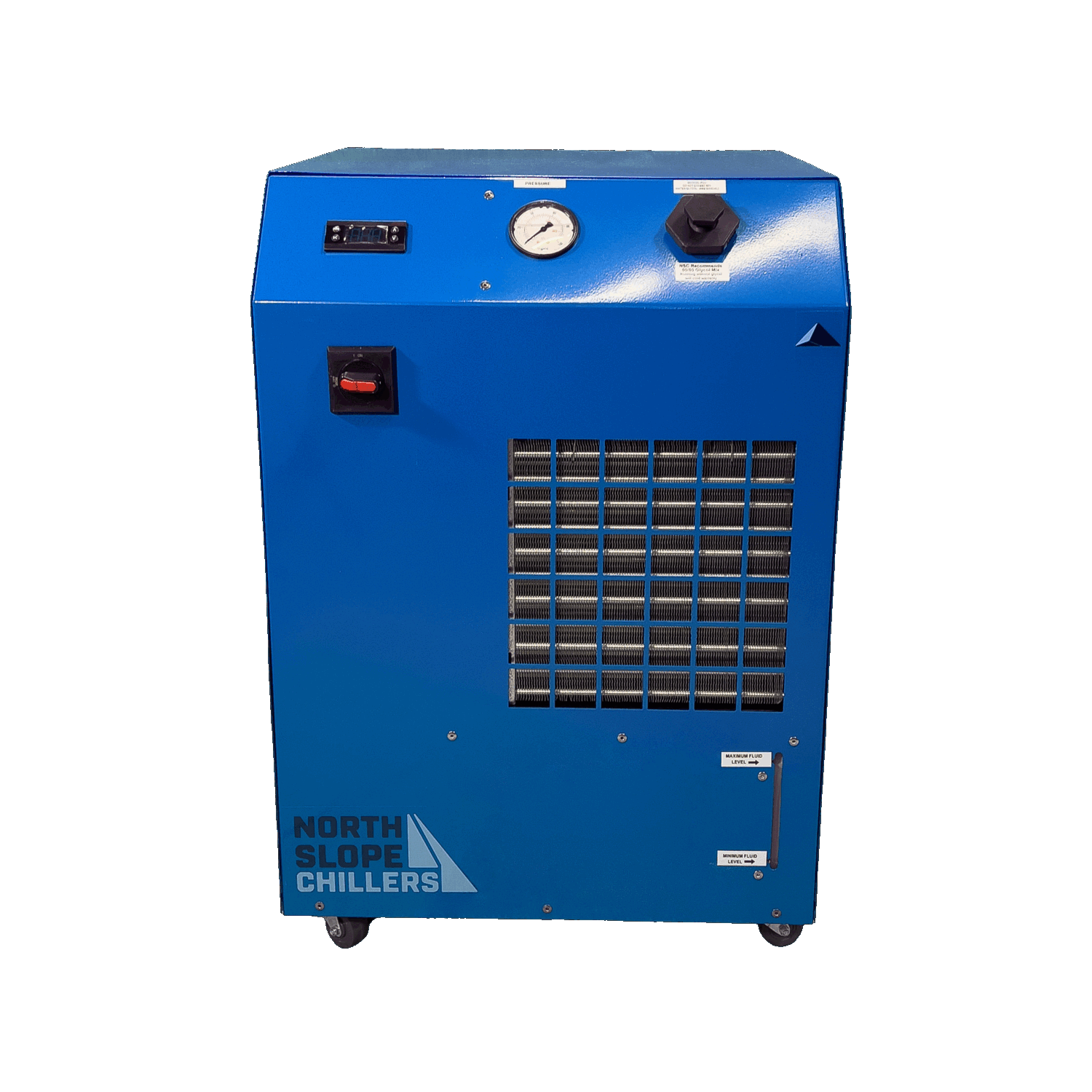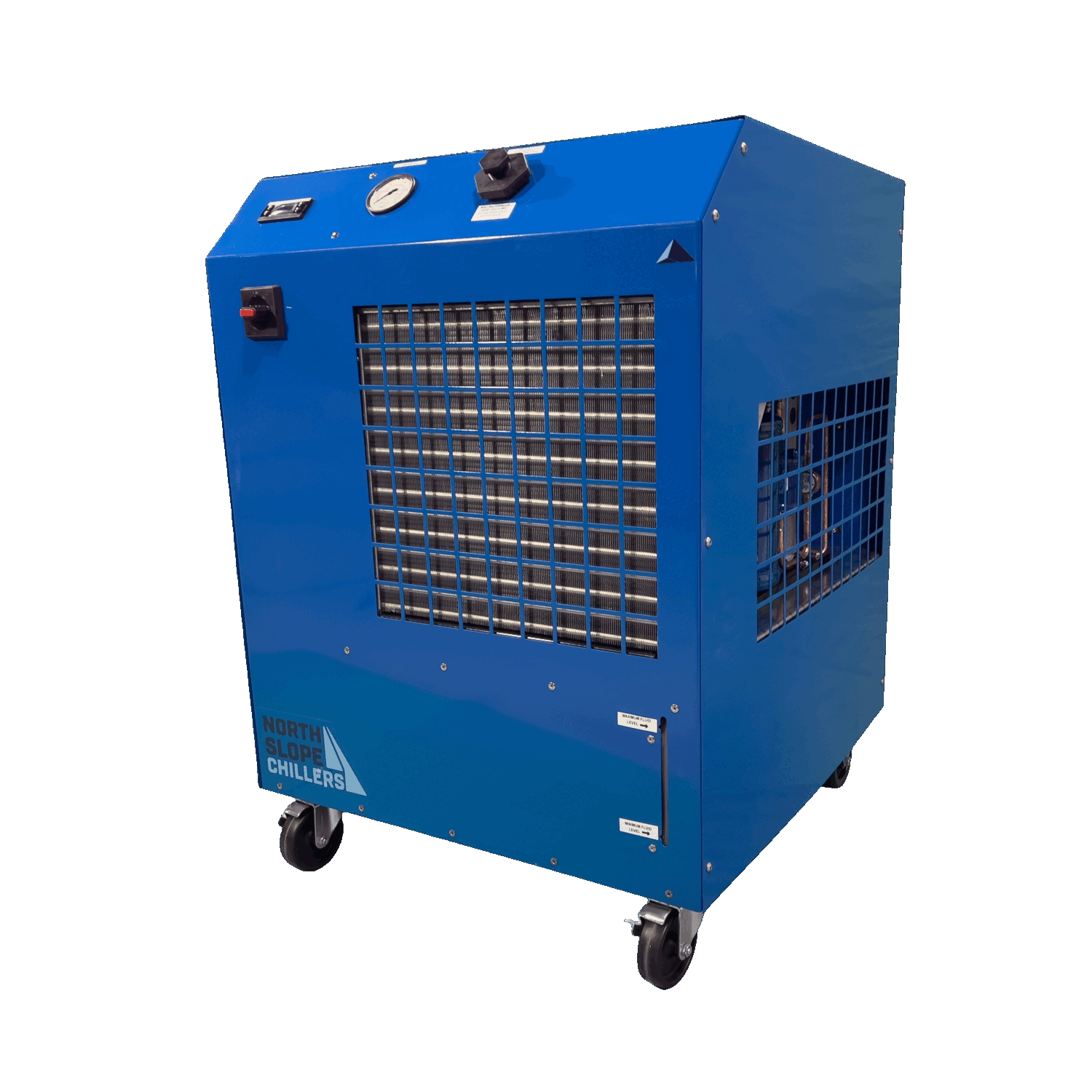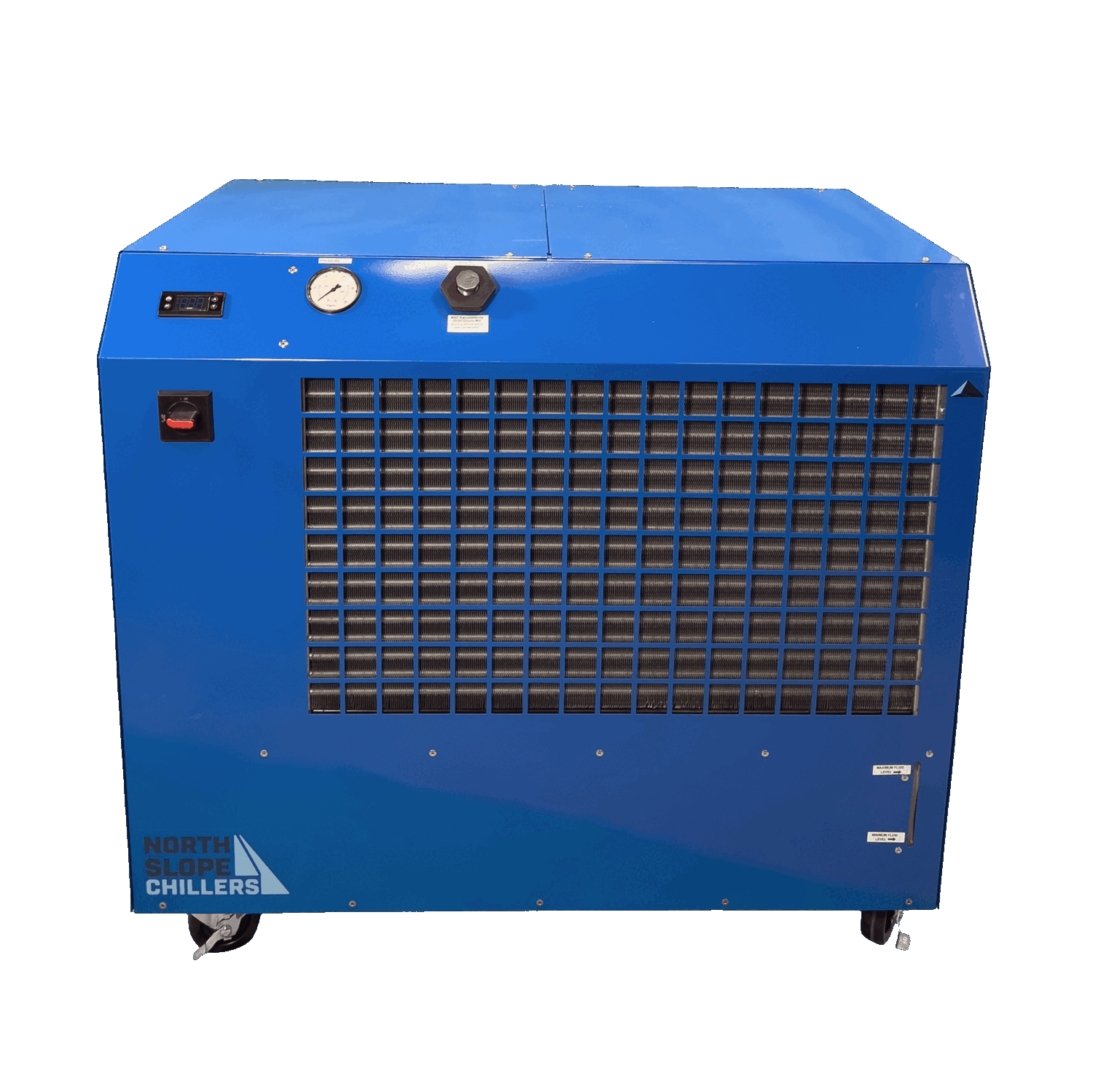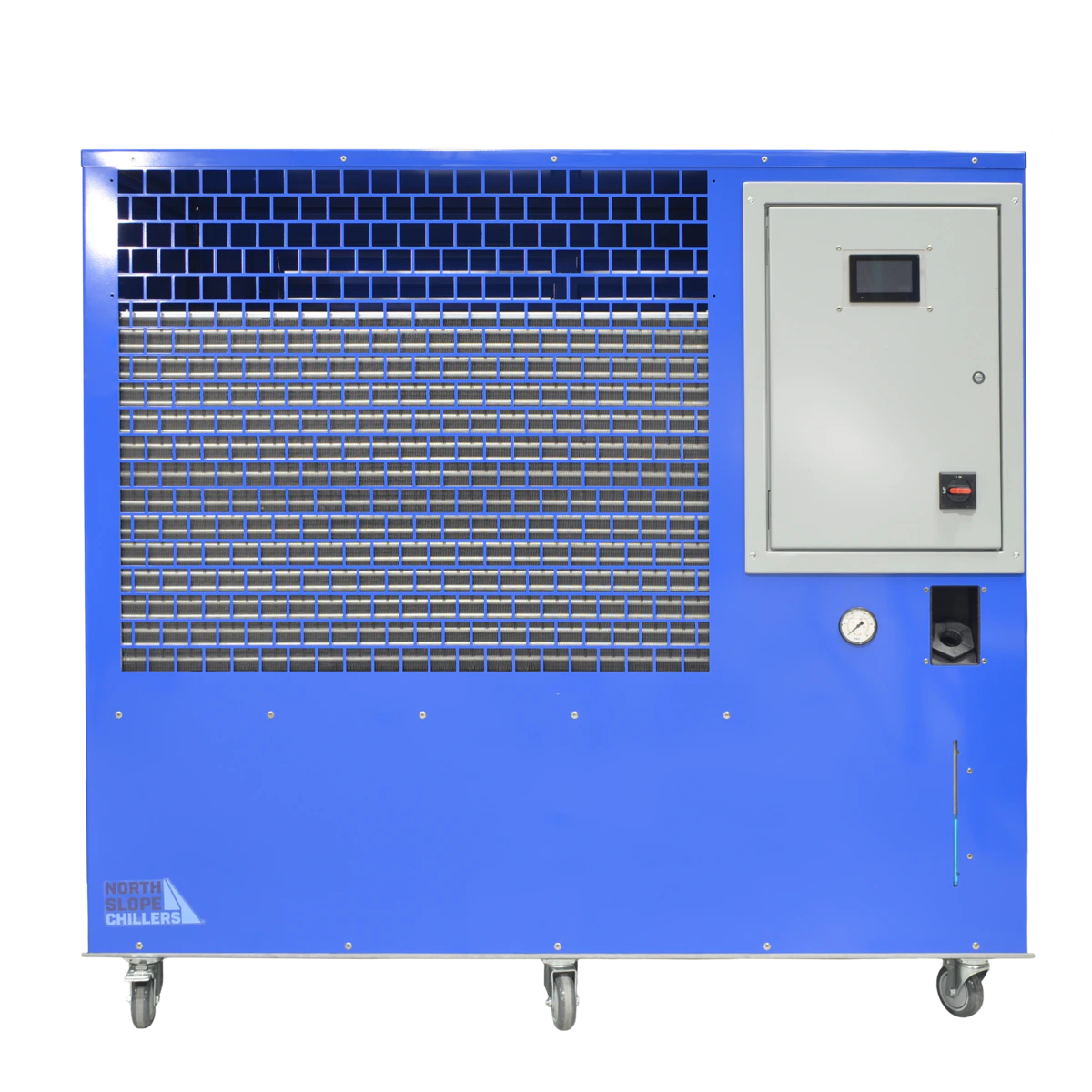
Need help choosing the right system?
Industrial Chiller Cost Guide (2026)
Updated April 2026
If you're shopping for an industrial chiller in 2026, you've probably noticed something frustrating: nobody wants to give you a straight price. Manufacturers ask you to "request a quote." Distributors quote wide ranges. Forums are full of outdated numbers from 2018.
So let's fix that. This guide gives you real, current 2026 pricing for industrial chillers across every common size and configuration — plus the math on what they actually cost to own over 15 years (which is usually a much bigger number than the sticker price).
We're a chiller manufacturer, and yes, we'd love to sell you one. But this guide is built to be useful whether you buy from us or not. The numbers below reflect current market reality, not just our catalog.
The 30-Second Answer
- Small portable chiller (1/3 to 1 ton): $3,000 – $7,000
- Mid-size portable chiller (2 to 5 tons): $7,500 – $15,000
- Large portable chiller (10 to 20 tons): $16,000 – $40,000
- Custom large-capacity chiller (30 to 60 tons): $50,000 – $150,000
- Low-temperature (sub-zero) chillers: add 30–60% to the equivalent standard model
- Custom or OEM-integrated systems: $25,000 – $250,000+
- Central plant water-cooled systems (100+ tons): $50,000 – $500,000+ for the chiller alone, plus the cost of a cooling tower and infrastructure
Want a real number for your specific application? Request a quote — no sales pressure, just numbers.
2026 Industrial Chiller Pricing by Capacity
These ranges reflect current pricing for portable, packaged, air-cooled industrial chillers — the type that makes up the majority of the U.S. industrial chiller market. They're indicative for a standard temperature range (40°F+) and standard fluid (water or water-glycol mix).
| Capacity | Standard temp price (2026) | Low-temp (sub-zero) price (2026) | Typical applications |
|---|---|---|---|
| 1/3 ton (4,000 BTU/hr) | $3,000 – $5,500 | $5,500 – $8,500 | Lasers, small CNC, single-vessel cooling |
| 1/2 ton (6,000 BTU/hr) | $4,500 – $7,000 | $7,000 – $11,000 | Small fermenters, lab equipment, brewery glycol loops |
| 1 ton (12,000 BTU/hr) | $5,500 – $9,000 | $9,000 – $14,000 | Medium fermenters, single injection mold, welding |
| 2 ton (24,000 BTU/hr) | $7,500 – $12,000 | $11,000 – $17,000 | Mid-size process cooling, multiple welders, dairy |
| 5 ton (60,000 BTU/hr) | $9,000 – $15,000 | $14,000 – $22,000 | Plastics, food processing, multi-machine shops |
| 10 ton (120,000 BTU/hr) | $16,000 – $28,000 | $25,000 – $40,000 | Larger manufacturing, brewing, central process |
| 20 ton (240,000 BTU/hr) | $28,000 – $48,000 | $42,000 – $70,000 | Heavy industrial, multi-process, OEM integration |
| 30 ton (360,000 BTU/hr) — custom | $45,000 – $75,000 | $65,000 – $110,000 | Large central process, OEM systems |
| 40 ton (480,000 BTU/hr) — custom | $60,000 – $95,000 | $90,000 – $145,000 | High-capacity manufacturing, OEM integration |
| 60 ton (720,000 BTU/hr) — custom | $85,000 – $150,000 | $130,000 – $220,000 | Large facility cooling, custom OEM builds |
| 60+ tons | Talk to us | Talk to us | Central plants, multi-circuit custom builds |
A few important things about this table:
- It's portable, air-cooled equipment. Water-cooled and central-plant systems are a different cost structure entirely. (Read our water-cooled vs. air-cooled comparison.)
- Prices vary by manufacturer. A premium U.S.-built chiller with a strong warranty and live tech support will sit in the upper half of these ranges. A budget import with limited support will sit at or below the lower end. The lifetime cost is often the opposite of the sticker price.
- Add 30–60% for low temperature. Sub-zero chillers need beefier compressors, special refrigerants, and additional insulation. The price reflects real engineering, not markup.
- These prices are for the chiller only. Installation, electrical, plumbing, freight, and fluid are separate. We'll get to those.
Find Your Chiller in 30 Seconds
Answer three quick questions and we'll point you to the right product.
What temperature do you need?
What Drives the Price
Five things primarily determine where you land in those ranges:
1. Cooling capacity (the biggest factor)
Capacity is measured in tons of refrigeration or BTU/hr (1 ton = 12,000 BTU/hr). Bigger chiller, bigger price — but the cost per ton actually decreases as size goes up. A 10-ton chiller doesn't cost 10× a 1-ton chiller; it usually costs about 4–5× as much. Economy of scale.
The mistake to avoid: buying too big. An oversized chiller short-cycles, wears out faster, and wastes electricity. A right-sized chiller with a 20–25% safety margin is the sweet spot.
Not sure how big you need? Try our free chiller sizing tool — it walks you through the math in about two minutes.
2. Temperature range
Standard process chillers cool down to 40–65°F. They're the cheapest because they use widely available refrigerants and standard components.
Low-temperature chillers that cool to sub-zero temperatures (some down to -40°F) cost 30–60% more for the same cooling capacity. They use specialty refrigerants like R-449A or R-452A, beefier compressors, and additional insulation.
If you don't need sub-zero, don't pay for it. If you do need sub-zero, our Deep Freeze series is built specifically for those applications.
3. Construction and component quality
Cheaper chillers use:
- Single-stage piston compressors (shorter life, less efficient)
- Painted-mild-steel cabinets (rust-prone, especially outdoors)
- Standard PVC piping
- Imported components with limited parts availability
- Limited or no warranty
Premium chillers use:
- Scroll or screw compressors (longer life, quieter, more efficient)
- Powder-coated or stainless cabinets
- Brass and stainless wetted surfaces
- Brand-name compressors with global parts support
- 1–5 year warranties with live tech support
The price difference is real. The lifetime cost difference is often bigger than the price difference — in favor of the better-built unit.
4. Configuration and features
Common add-ons that affect price:
- Outdoor rating — adds 5–10% (weather-resistant enclosure, freeze protection)
- Smart controls — adds 3–8% (remote monitoring, alarms, BMS integration)
- Custom voltage/phase — adds 2–5% (480V 3-phase, international voltages)
- Specialty fluid compatibility — adds 5–15% (DI water, aggressive chemicals)
- Dual pumps or redundant components — adds 10–25% (mission-critical reliability)
- Custom colors, branding, OEM integration — varies by scope
For straight-up production cooling, you don't need most of these. For OEM products or critical processes, they pay for themselves quickly.
5. Brand, warranty, and support
This one is harder to quantify but easy to feel later. A chiller that's down for two days because the manufacturer doesn't stock the part you need can cost more in lost production than the chiller itself.
When comparing prices, ask:
- What's the warranty length, and what does it actually cover?
- Are parts in stock in the U.S., and how fast can you get them?
- Is there phone tech support, or just a contact form?
- How long has the company been making chillers?
Cheap is expensive when the chiller is down.
The Hidden Costs Most Buyers Miss
The chiller's price tag is one line item. Here's what else shows up.
Freight and rigging: $200 – $2,000+
A 1-ton chiller fits on a pallet and ships LTL freight for a few hundred dollars. A 20-ton unit may need a flatbed and a forklift on the receiving end. Always ask for delivered pricing, not just the chiller price.
Electrical work: $500 – $3,000
Most portable chillers need a dedicated circuit at the right voltage and amperage. If you don't already have one, an electrician needs to run it. Costs scale with chiller size and distance from your panel.
Process water plumbing: $300 – $2,000+
You need supply and return lines between the chiller and your process. Short runs in flexible hose are cheap. Long runs in hard-piped insulated lines aren't.
Glycol fluid: $100 – $500 for initial fill
If your application needs glycol (for sub-freezing or freeze protection), the initial fill is a real cost. A 50% glycol mix in a 30-gallon system can be $200–$400.
Installation labor: $0 – $5,000
Plenty of facilities can install a portable chiller in-house. Some can't, or shouldn't. If you're hiring a contractor, factor that in.
Optional extras
- Spare parts kit ($200–$1,000)
- Extended warranty ($500–$3,000)
- Remote monitoring subscription ($200–$1,000/year)
- Annual preventive maintenance contract ($300–$1,500/year)
Most of these are optional, but worth at least getting quoted up front.
What It Actually Costs to Own a Chiller for 15 Years
Here's where the rubber meets the road. The sticker price is rarely the biggest cost over the chiller's life.
Example: 5-ton portable air-cooled chiller running 16 hours/day, 5 days/week
| Cost component | 15-year total |
|---|---|
| Purchase price | $12,000 |
| Installation (electrical + plumbing) | $2,500 |
| Freight | $500 |
| Initial glycol fill | $250 |
| Electricity (5 kW × 4,160 hrs × 15 yrs × $0.13) | $40,560 |
| Annual maintenance ($400 × 15) | $6,000 |
| Glycol replacement (every 4 years) | $750 |
| 15-year total cost of ownership | ~$62,560 |
The chiller itself is less than 20% of the lifetime cost. Energy is more than 60%.
This is why efficiency matters more than purchase price for most buyers. A chiller that's 15% more efficient saves you $6,000+ over its life — usually more than the price difference between a budget and a premium model.
Total Cost of Ownership Calculator
Estimate what a chiller will actually cost over 5 years.
Purchase
~$5,500
Electricity/yr
$576
Maintenance/yr
$300
5-Year Total
$10,280
Estimates based on approximate power consumption of 2.4 kW and typical maintenance costs. Actual costs vary by model, usage, and local rates.
Same chiller, running 24/7
If that same 5-ton unit runs around the clock, electricity alone hits $121,680 over 15 years and total cost of ownership is over $140,000. The chiller is now ~8% of the total. Buy on efficiency.
Same chiller, running seasonally (3 months/year)
If it's a brewery glycol loop running heavily for 3 months and lightly the rest of the year, total electricity might be $8,000 over 15 years and TCO drops to ~$30,000. Now the purchase price is ~40% of the total. Buy on simplicity and reliability.
The takeaway: match your purchase decision to how hard the chiller will actually work. There's no universal "best buy."
Need help with your cooling calculations?
Skip the guesswork — our team can size your chiller based on your exact heat load, flow rate, and process requirements.
Buying vs. Renting in 2026
Rental rates in 2026 typically run 5–10% of purchase price per month for industrial chillers. For a $12,000 5-ton unit, that's $600–$1,200/month, plus delivery and pickup fees on each end.
Buy if: you'll need cooling year-round, your application is permanent, or you want full control over maintenance and upgrades.
Rent if: you have a seasonal peak (3 months or less), a temporary project (under 6 months), an emergency backup need, or you want to trial a chiller size before committing to a purchase.
For most North Slope Chillers customers, the math favors buying within the first year — but we'll tell you honestly if rental is the right call for your situation.
How to Get an Accurate Quote
Generic ranges are useful for budgeting. They're not enough to actually buy a chiller. To get a real quote, you'll need:
- Cooling load in BTU/hr or tons (or your process details — we can calculate it)
- Desired fluid temperature (setpoint and acceptable range)
- Flow rate in GPM
- Fluid type (water, glycol mix, DI water, other)
- Ambient conditions (indoor/outdoor, hot/cold climate, enclosed/open)
- Electrical service available (voltage, phase, amps)
- Timeline (when do you need it running?)
If you have all of these, request a quote and you'll typically get pricing within 24–48 hours. If you don't have all of these, that's fine — most customers don't on day one. Call us at (866) 826-2993 and we'll walk through it together.
Where North Slope Chillers Fits in the Pricing Landscape
We build portable, packaged, air-cooled industrial chillers from 1/3 ton to 20 tons in our standard line, and custom-engineered systems all the way up to 60 tons through our custom and OEM team. Our pricing typically lands in the upper-middle of the ranges in this guide because:
- Every unit is built in our Salt Lake City, Utah facility — not imported
- We use brand-name compressors with U.S. parts availability
- Standard warranty is 12 months with extensions available
- Phone tech support comes from the same engineers who designed the unit
- Most in-stock orders ship in 1–3 business days
For custom and OEM applications, we engineer to your specs — which can mean prices anywhere from $25,000 for a modified standard unit to $250,000+ for a complex multi-circuit OEM build.
We're not the cheapest. We're not the most expensive. We're built to be the chiller you don't have to think about for 15+ years.
Quick Cost Comparison Framework
| Your priority | Where to focus on price |
|---|---|
| Lowest upfront cost | Standard portable air-cooled, smallest size that works |
| Lowest lifetime cost | Highest-efficiency model in your size range |
| Maximum reliability | Premium build with strong warranty + spare parts kit |
| Mission-critical uptime | Redundant pumps, dual circuits, service contract |
| Quickest delivery | In-stock standard unit (skip customizations) |
| OEM equipment integration | Custom-engineered, volume pricing |
| Seasonal/temporary use | Rental or used market |
Common Mistakes That Cost Money
- Buying on sticker price alone. A $1,500 cheaper chiller that's 10% less efficient costs you $4,000+ over its lifetime in extra energy. Penny wise, dollar foolish.
- Undersizing to save money. An undersized chiller runs 100% of the time, never reaches setpoint, wears out faster, and costs more in electricity. Always add a 20–25% safety margin.
- Oversizing because "more is better." Oversized chillers short-cycle, which is hard on compressors and reduces life. They also cost more to buy, install, and run.
- Forgetting installation costs. A $10,000 chiller can become a $14,000 installed system once you add electrical, plumbing, and freight.
- Skipping the warranty conversation. A 90-day warranty vs. a 5-year warranty is a meaningful financial difference.
- Ignoring efficiency ratings. Always ask for the kW/ton or COP at your actual operating conditions, not just the nameplate spec.
The Bottom Line
In 2026, expect to pay $3,000–$50,000 for most standard portable industrial chiller applications, $50,000–$150,000 for custom 30–60 ton systems, and well into six figures for central-plant systems. But the purchase price is only 15–30% of what the chiller will actually cost you over its life. Energy is the biggest cost. Right-sizing, efficiency, and build quality matter more than the sticker price for almost every long-term application.
The cheapest way to make a smart buying decision is to skip the guesswork and talk to someone who builds these things every day.
Request a quote with whatever details you have, or call us at (866) 826-2993 — most calls take less than 15 minutes and you'll walk away knowing exactly what you need and what it'll cost. No sales pressure, no upsell games, just numbers.
You can also try our free chiller sizing AI tool for an instant size and product recommendation based on your process.
Related Reading
Frequently Asked Questions
How much does an industrial chiller cost in 2026?+
Industrial chiller prices in 2026 range from about $3,000 for a 1/3-ton portable unit to $250,000 or more for a large custom-engineered system. Most small-to-mid manufacturing applications fall in the $5,000–$25,000 range for a portable air-cooled chiller. Larger central-plant systems with cooling towers can reach six or seven figures depending on capacity and complexity.
What does a 5-ton industrial chiller cost?+
In 2026, a 5-ton portable air-cooled industrial chiller typically costs $9,000–$15,000 for a standard temperature range (40°F+) and $14,000–$22,000 for a low-temperature (sub-zero) configuration. Outdoor-rated, custom-color, or smart-controls upgrades add 5–15%.
What does a 10-ton industrial chiller cost?+
A 10-ton portable air-cooled industrial chiller in 2026 generally costs $16,000–$28,000 for standard models and $25,000–$40,000 for low-temperature versions. Custom enclosures, redundant pumps, or specialty fluid compatibility can push the price higher.
Is it cheaper to buy or rent an industrial chiller?+
For permanent or year-round needs, buying is almost always cheaper over a 15-year lifespan. Rental rates typically run 5–10% of purchase price per month, so you reach break-even in 10–18 months. Rental makes sense for seasonal peaks, temporary projects, emergency backup, or trial runs before committing to a purchase.
How much does it cost to operate an industrial chiller per year?+
Annual operating cost depends on size, run hours, and electricity rates. As a rough 2026 estimate: a 5-ton chiller running 8 hours/day at $0.13/kWh costs about $1,800/year in electricity. The same unit running 24/7 costs about $5,400/year. Add $200–$500 for annual maintenance and $100–$300 every 3–5 years for glycol replacement.
What's the total cost of ownership for an industrial chiller?+
Over a 15-year lifespan, the total cost of ownership for a typical industrial chiller is 2–3× the purchase price. For a $12,000 5-ton unit, expect roughly $30,000–$45,000 in total — purchase price plus installation, electricity, maintenance, and fluid replacement. Energy is usually the biggest single cost component.
Why are some chillers so much more expensive than others?+
The biggest price drivers are cooling capacity (size), temperature range (low-temp adds 30–60%), construction quality, brand reputation, warranty terms, and special features like smart controls, custom enclosures, redundant components, or specialty material wetted surfaces. A no-name 5-ton chiller may sell for $6,000 while a premium one with a 5-year warranty sells for $15,000 — and the lifetime cost difference is often the opposite of what the sticker suggests.
How quickly can I get a chiller after I buy it?+
In-stock portable chillers from North Slope Chillers ship within 1–3 business days from our Salt Lake City facility. Built-to-order standard configurations typically ship in 2–4 weeks. Custom and OEM systems generally have 4–8 week lead times depending on complexity.
What hidden costs should I watch out for?+
The most commonly missed costs are: dedicated electrical circuit installation ($500–$3,000), process water plumbing ($300–$2,000+), freight and rigging ($200–$2,000+ depending on size and distance), upgraded glycol fluid ($100–$400 for initial fill), and any required service contracts or extended warranties. Always ask for an itemized total — not just the chiller price.
Ready to solve your cooling challenge?
Our team has helped thousands of businesses find the right chiller solution. Let us help you next.
Keep exploring: Sizing & Calculations
This article is part of our Sizing & Calculations resource collection. Browse all the guides in this topic.